Future-proofing tech workspaces: designing for agility, collaboration and innovation
Tech firms scale fast. Headcount can double in months, teams can reorganise overnight, and hybrid working has reshaped how offices are used. Many firms operate in constant start-up mode, innovating and evolving at pace. For leaders, this means the workplace needs to be more than a room with desks, it must be a strategic asset that flexes with growth, attracts talent, and supports non-stop innovation.
Why this matters to tech leaders
The stakes are high. Only 22% of UK office workers attend the office 5 days a week, with many employees preferring the work-life balance and flexibility of working from home. For tech businesses – where much of the work can be done from anywhere – it’s easy to assume the office has lost its relevance. But the reality is the opposite: physical space is still vital for driving collaboration, embedding culture and sparking the kind of innovation that doesn’t happen on video calls.
The office is no longer about routine desk work, it’s about creating moments that matter — whether that’s onboarding new hires, brainstorming product ideas, or building the sense of community that keeps talent engaged. Get the design wrong, and you risk empty space, wasted investment and disengaged employees. Get it right, and your workplace becomes a living platform for growth.
Key challenges for tech workspaces
For tech leaders, the office is a tool that directly impacts growth and culture. The main challenges shaping workplace decisions right now include:
- Scaling at speed: Tech firms often scale or pivot faster than leases allow, meaning space risks feeling outdated or overcrowded quickly.
- Staff churn: In the past five years, staff turnover in the industry has grown from 25.8% to 35.6%, meaning talent retention and building community is more important than ever
- Attracting and retaining talent: With demand for developers and engineers outstripping supply, workplace design can be a differentiator. Nearly 48% of UK workers say the office environment affects whether they stay with an employer, while 77% of candidates consider company culture before applying.
- Making hybrid work effective: Hybrid setups are here to stay, but just 35% of UK leaders believe it boosts productivity, while 38% admit they’re struggling to make it work. The office has to actively support collaboration, and provide tangible work and social benefits to making the commute, rather than just being a place to sit.
- Balancing ESG with cost pressures: Driven by changing investor and client expectations, sustainable design is increasingly non-negotiable, but leaders need solutions that meet ESG goals without inflating budgets.
The challenge isn’t simply about finding more square footage, it’s about making every square metre count, ensuring the office works harder for both people and performance.
Designing for agility
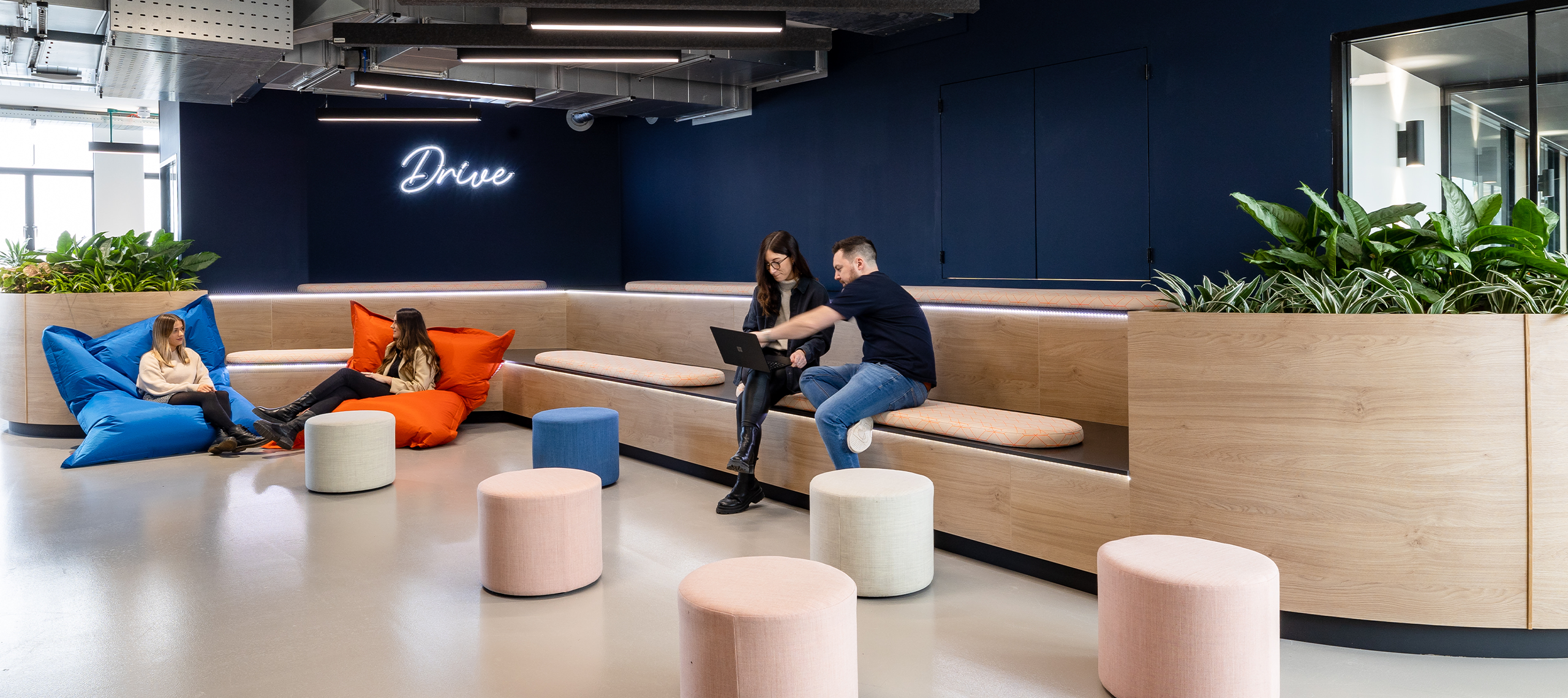
Agility should be at the heart of any future-ready office. Modular layouts, reconfigurable furniture and infrastructure designed for flexibility let teams adapt without constant reinvestment. A space that shifts from project war room in the morning to boardroom at midday and buzzing events space by evening ensures nothing sits idle. Investing in future-proof wiring, power and AV avoids painful retrofits when growth inevitably arrives.
As Rebecca Patten, head of our Client Care team, explains:
“If you have an area of the office earmarked as ‘growth’ space for more workstations, put the power and data provisions in during your fit-out, even if you don’t need the desk spaces yet. That way, when you’re ready to grow your team, you can easily install furniture straight into place. Adding the power and data retrospectively just causes that little more inconvenience and expense.”
The WOW factor
Tech firms are built on on energy, creativity, and a limitless sense of possibility — and your space should reflect that. Unlike professional services firms, where polish and formality dominate, tech companies attract people who want environments that feel dynamic, playful, and inspiring. That’s where the wow factor comes in.
Mark Pullen of Xledger captures it perfectly when describing XLedger’s new office: “Everyone walks in here saying ‘holy cow, what an incredible space. It’s better than my home.’ And that’s the point.” It’s not about flash for flash’s sake – it’s about creating a space that mirrors the company’s culture, encourages innovation, and makes employees proud to work there. Bold receptions, striking hubs, playful breakout areas, and curated materials signal ambition and spark curiosity before anyone logs in.
Integrating technology
For tech firms, the expectation is clear: offices should be as smart as the products being built inside them. AI sensors can track occupancy, energy use, and air quality, helping leaders make informed decisions. They can also highlight underused zones that could be repurposed, ensuring every square metre adds value.
Smart lighting systems can shift between different modes – brighter task lighting for focused work, softer tones for collaboration, or energising setups during sprint cycles – subtly influencing how people use the space and boosting creativity. Future-ready spaces also need to support AI-driven operations – predictive room booking, automated environmental adjustments, and analytics that inform space use and employee wellbeing.
Infrastructure matters too. Uninterruptable power supplies, secure data systems, Faraday cages for sensitive R&D, and access control are increasingly crucial in cyber-sensitive tech environments. These features aren’t just geeky – they ensure continuity, resilience, and trust for employees and clients.
Hybrid meeting rooms should be inclusive, so remote voices aren’t sidelined, and day-to-day interactions should be frictionless, from seamless visitor check-in to intuitive desk booking.
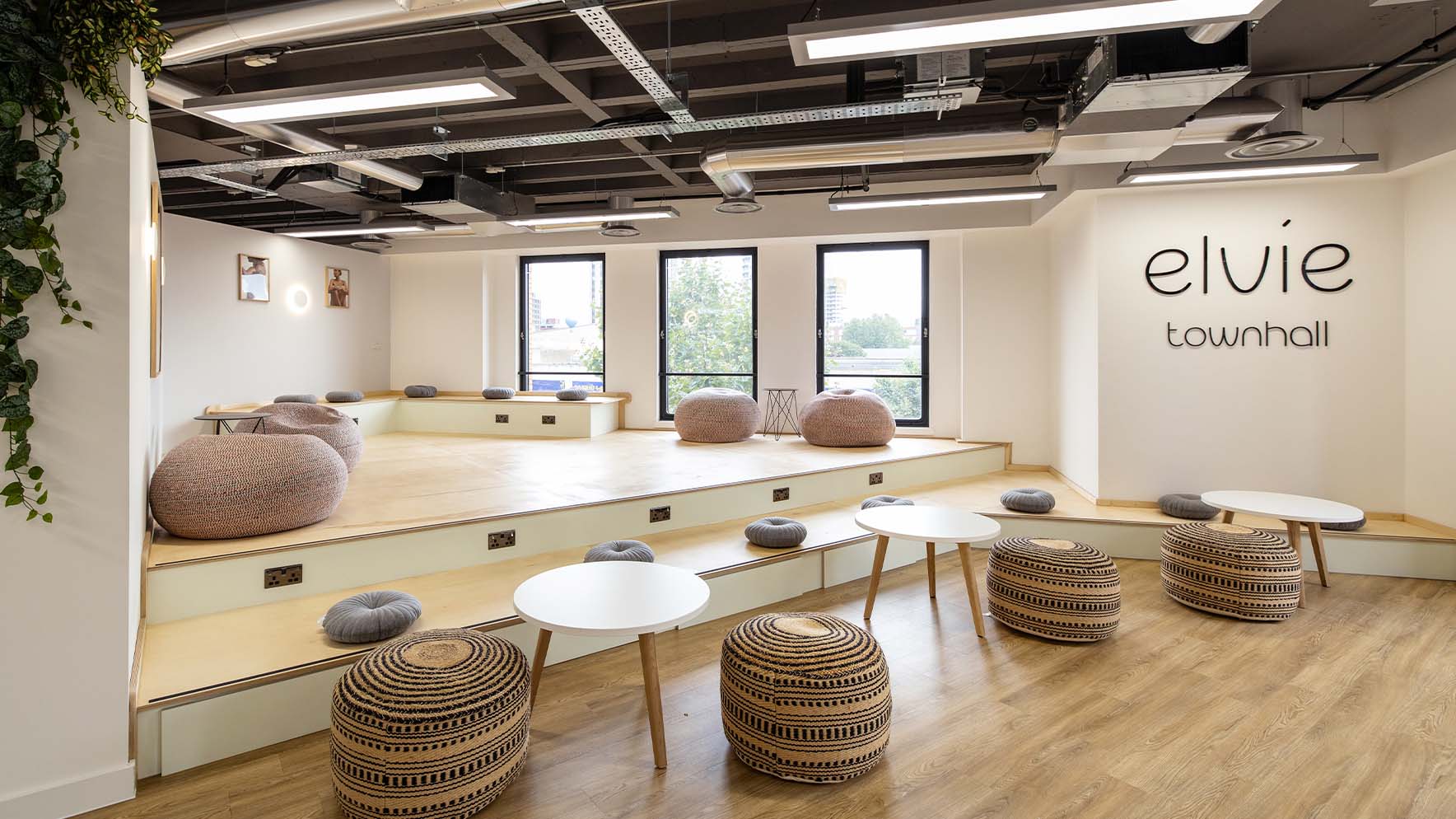
A good example is our work with fem-tech firm Elvie, where a large R&D area was designed to foster creative innovation. By blending flexible layouts with tech-enabled features, the space encourages experimentation and collaboration – exactly the kind of environment growing tech firms need.
Wellbeing and culture
Culture is often the differentiator in attracting and retaining talent, and the workplace plays a huge role in making it tangible. Biophilic design elements such as plants, natural light and organic materials are proven to increase wellbeing by up to 15% and productivity by 6%. Providing different environments – whether quiet focus pods, collaboration tables or communal social areas – allows employees to choose how and where they work best. An office that reflects your culture makes it easier to win the war for talent, and helps hybrid employees see the value of coming in.
Learn more about designing your tech workspace with culture in mind here.
Inclusivity is also an important facet of workplace wellbeing. Studies have found that up to 53% of UK tech workers identify as neurodivergent – yet only around 3% of employers report that in their workplace, highlighting a huge disclosure and support gap. A truly inclusive design approach might include sensory-friendly quiet zones, adjustable lighting and flexible seating – so people can tailor their environment to the way they think best. These adjustments don’t just support neurodiverse individuals, they benefit everyone by creating calmer, more adaptable spaces.
Designing for the ‘post-office’ office
If work isn’t always in the office, the office becomes an experience hub. Future-proof tech spaces are increasingly taking cues from cultural venues, labs, and member clubs rather than rows of desks. They’re designed to inspire, energise, and facilitate meaningful interactions:
- VR collaboration lounges for immersive team sessions
- Rentable studio pods for content creation
- Hybrid event spaces where staff and clients collaborate in person and virtually
The goal isn’t to seat everyone every day, but to make the office a destination that adds value. Every visit should feel purposeful — whether that’s for deep collaboration, hands-on experimentation, social connection, or showcasing your culture to clients and partners. In the post-office world, the environment itself becomes a tool for engagement, innovation, and brand expression.
Sustainability in tech offices
For many tech firms, sustainability is not just a part of their values, but has become a reputational necessity. From choosing low-carbon, recyclable materials to aiming for WELL or BREEAM certification, the office can be a visible commitment to ESG goals. Smart monitoring systems add another layer of efficiency, cutting energy use while saving money. When sustainability is designed in from the start, it strengthens your brand and reassures investors, employees and clients alike.
Learn more about office sustainability ratings here.
At the same time, tech offices increasingly need to support distributed teams across time zones and continents. By 2030, UK tech firms may have employees displaced by climate or geopolitical shifts. Future-proof workplaces combine sustainability with global readiness, providing:
- Soundproof pods for late-night or asynchronous calls
- Integrated daylight simulation to support circadian rhythms for night-shift or remote workers
- Culturally adaptable spaces: multi-faith rooms, multilingual signage, and diverse kitchen setups
Proven in practice
Interaction has delivered future-proof workplaces for some of the UK’s most ambitious tech firms:
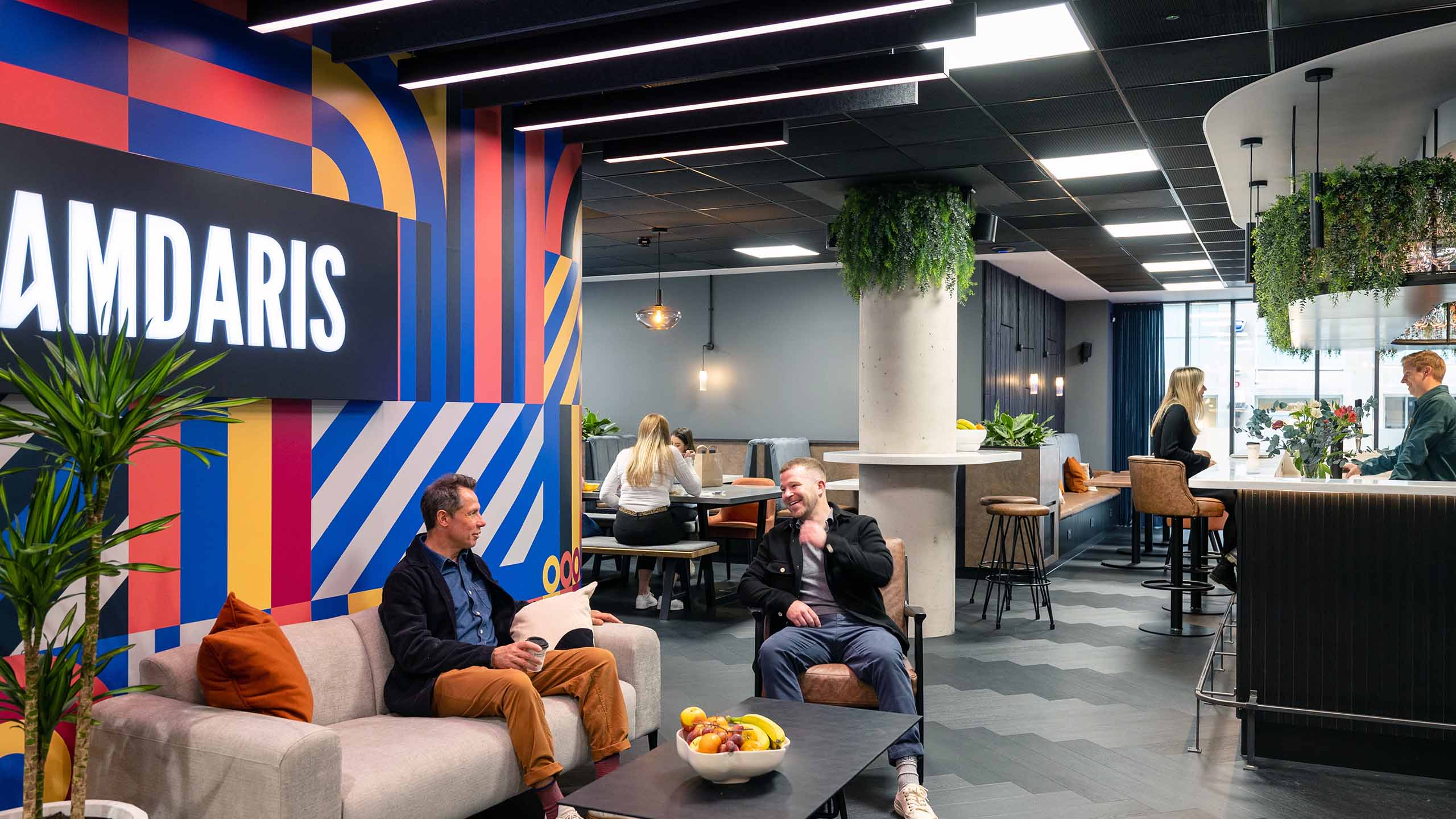
- Amdaris – Following a 94% revenue increase, Amdaris invested in a new HQ designed to reflect their scale and ambition. With creative zones, quiet rooms and wellbeing spaces, the office has helped them support expansion while living their values. The space was designed with future growth in mind too – tiered seating will double as future storage space, whilst the mezzanine floor has room for additional desks as the team continues to grow.
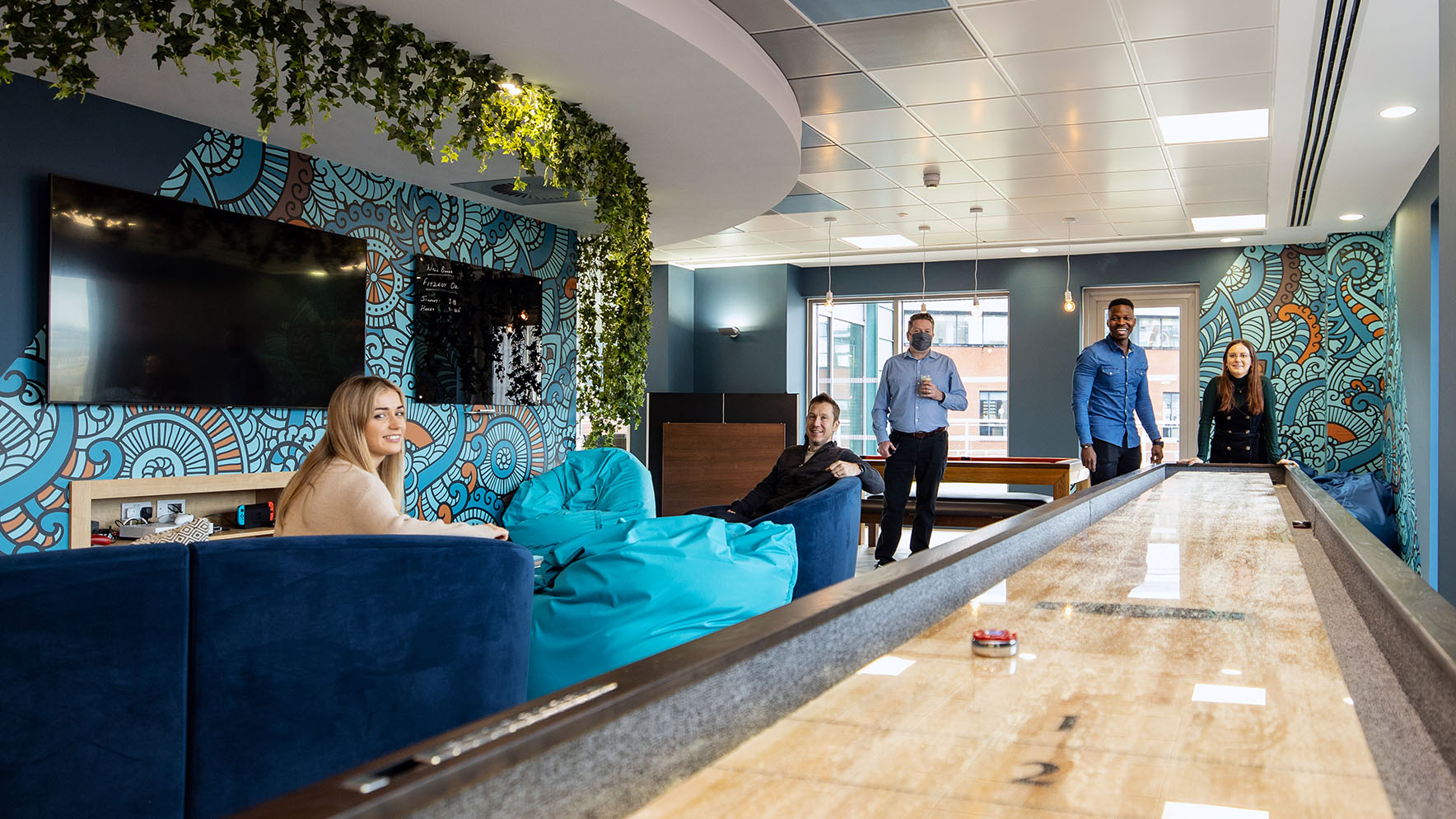
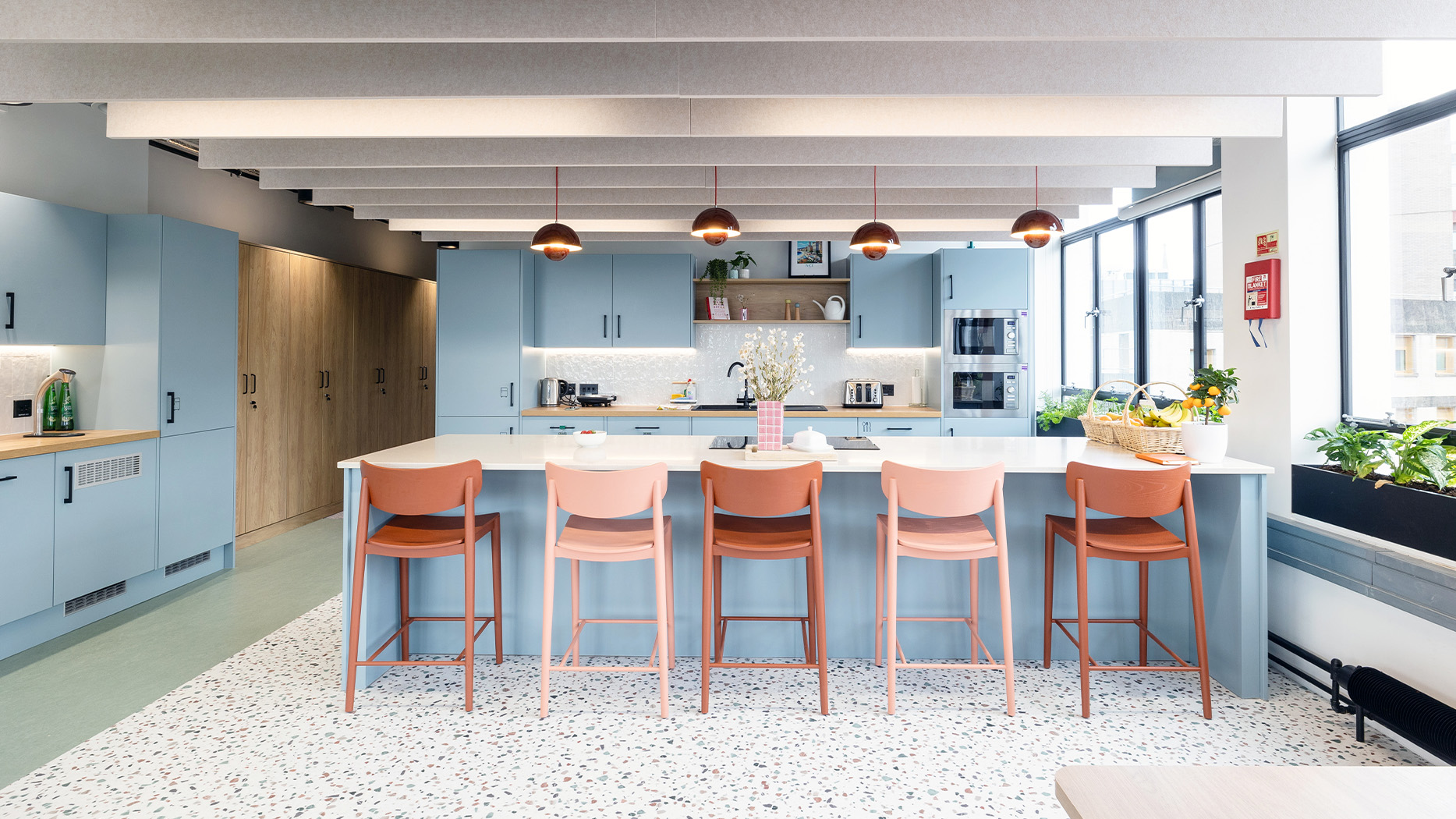
- Ghyston – In just seven weeks, we reimagined 8,000 sq ft into a workplace that embodies the software firm’s culture. From a kitchen with an indoor herb garden to a gaming room and wellbeing spaces, the design balances productivity with personality. Distinctly Ghyston and build for productivity, community and innovation, Ghyston’s CEO, Emily Hill, summed it up perfectly: “our office is now a true reflection of who we are and how we work“.
- Immersive Labs – We delivered a 16,000 sq ft “Immersive Playground” for the cyber security firm in just 11 weeks. With e-scooter pathways, wellness rooms and a media-rich “Hive” breakout zone, it’s a workspace that supports rapid growth and reinforces brand identity.
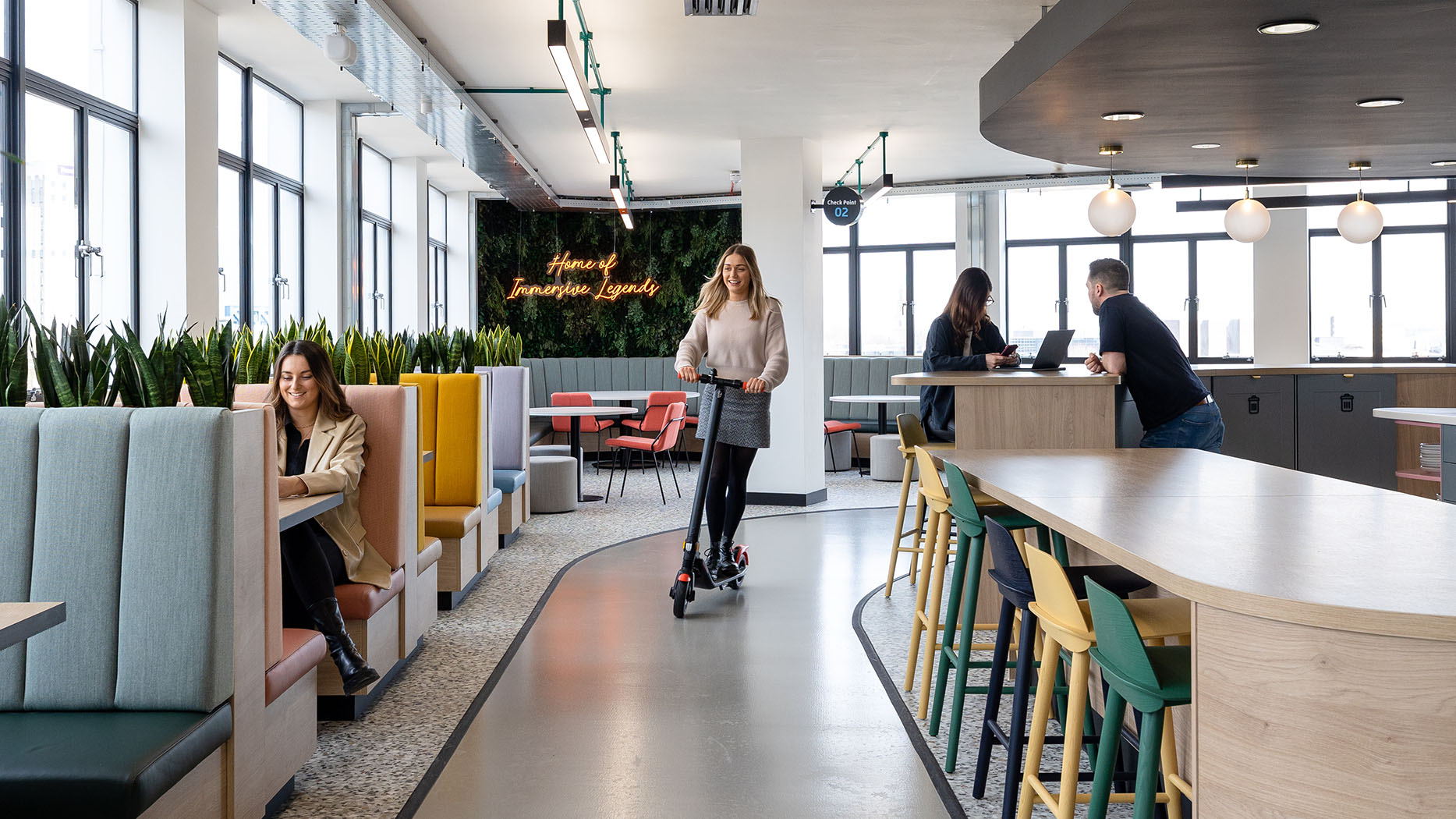
These projects show how flexibility, technology, wellbeing and sustainability come together in real-world settings.
Your future-proof checklist
When planning your next workspace, ask yourself:
- Will this space flex with growth and changing roles?
- Does it support seamless hybrid collaboration?
- Is wellbeing built in, not bolted on?
- Does it reflect our culture strongly enough to attract top talent?
- Are we planning infrastructure that will serve future needs as well as today’s?
Final thoughts
Tech firms need workspaces that evolve as fast as they do. By focusing on agility, technology, culture and sustainability, your office can become a growth driver rather than a constraint.
We’ve helped some of the UK’s most ambitious tech firms scale with confidence. If you’d like to explore what that could look like for your business, let’s talk. Check out how we can help tech firms like yours, or get in touch today.


