Placemaking in practice: why it’s becoming a core leasing strategy for landlords
Across most office portfolios, leasing performance has become increasingly uneven. Two buildings with similar specifications can deliver very different results.
In many cases, the difference isn’t the floorplate or the headline rent. It’s how the building works as a whole – how people arrive, where they spend time, and how easily occupiers can move in and operate.
That’s something we’re seeing more and more in our conversations with landlords and asset managers. Placemaking has come into sharper focus as a result. It’s now a familiar term in commercial property, referenced in leasing brochures, planning documents and investment strategies – although often with slightly different meanings attached.
At its simplest, placemaking is about improving how a building is experienced – not just how it looks, but how it works for the people using it every day. For landlords and asset managers, it’s becoming a practical way to support leasing, reduce friction and protect value, rather than an abstract idea about experience or brand.
The context has changed, even if the market has stabilised
Hybrid working patterns are now broadly understood, and building occupancy has settled compared to the volatility of recent years. What has changed is how occupiers assess risk and value.
Tenants are more decisive. They want offices that justify the commute, support collaboration and focus, and reflect their culture. At the same time, they are looking to minimise downtime, control upfront spend and get to work in their new space straight away.
That combination has quietly reset expectations. Buildings that make decisions easier are performing better. Buildings that rely on occupiers to do the heavy lifting are increasingly being challenged.
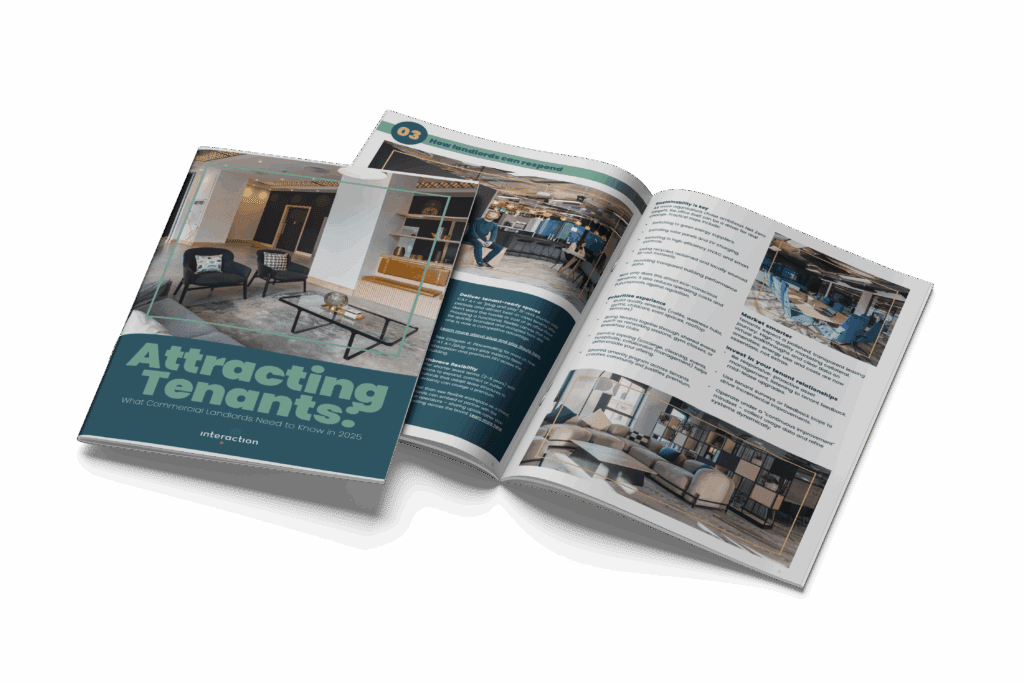
Want to learn more about attracting and retaining tenants?
Read our latest whitepaper: Attracting Tenants: What Commercial Landlords Need to Know.
What does placemaking actually deliver?
Placemaking is often talked about in experiential terms, but its impact is fundamentally commercial.
In practice, it’s a building-wide programme that improves the journey from threshold to desk:
- a reception that feels welcoming, intuitive and easy to navigate
- shared amenities that support everyday use, not just tours
- tenant-ready, plug-and-play space that removes friction from leasing
When these elements are planned together, they shorten voids, reduce incentives and support stronger ERVs – often across floors that haven’t been fitted at all.
The challenge is avoiding the temptation to treat placemaking as a series of isolated upgrades. A new café or a refreshed reception on its own rarely moves the dial. Instead, the value comes from coherence and sequencing, and from how the offer actively supports leasing decisions – not simply from spend.
Are institutional investors ahead of the curve?
Institutional investors have been ahead of the curve on placemaking because they look beyond individual leases.
At a panel we hosted last year, Denz Ibrahim, Head of Futuring and Placemaking at Legal & General, spoke about how they assess value across assets.
Alongside traditional metrics like rent, occupancy and retention, Legal & General measures horizontal value – how a workspace offer supports engagement across an entire development, anchors mixed-use schemes and contributes to long-term place identity.
One example Denz shared was particularly instructive. Within a mixed-use development, a landlord accepted coworking on the ground floor at around half the headline office rent. Rather than diluting value, the workspace became a social and economic anchor. Residential units above achieved a 25% rental uplift, driven by the activity, footfall and identity created at ground level.
FOUNDRY Wandsworth and placemaking at neighbourhood scale
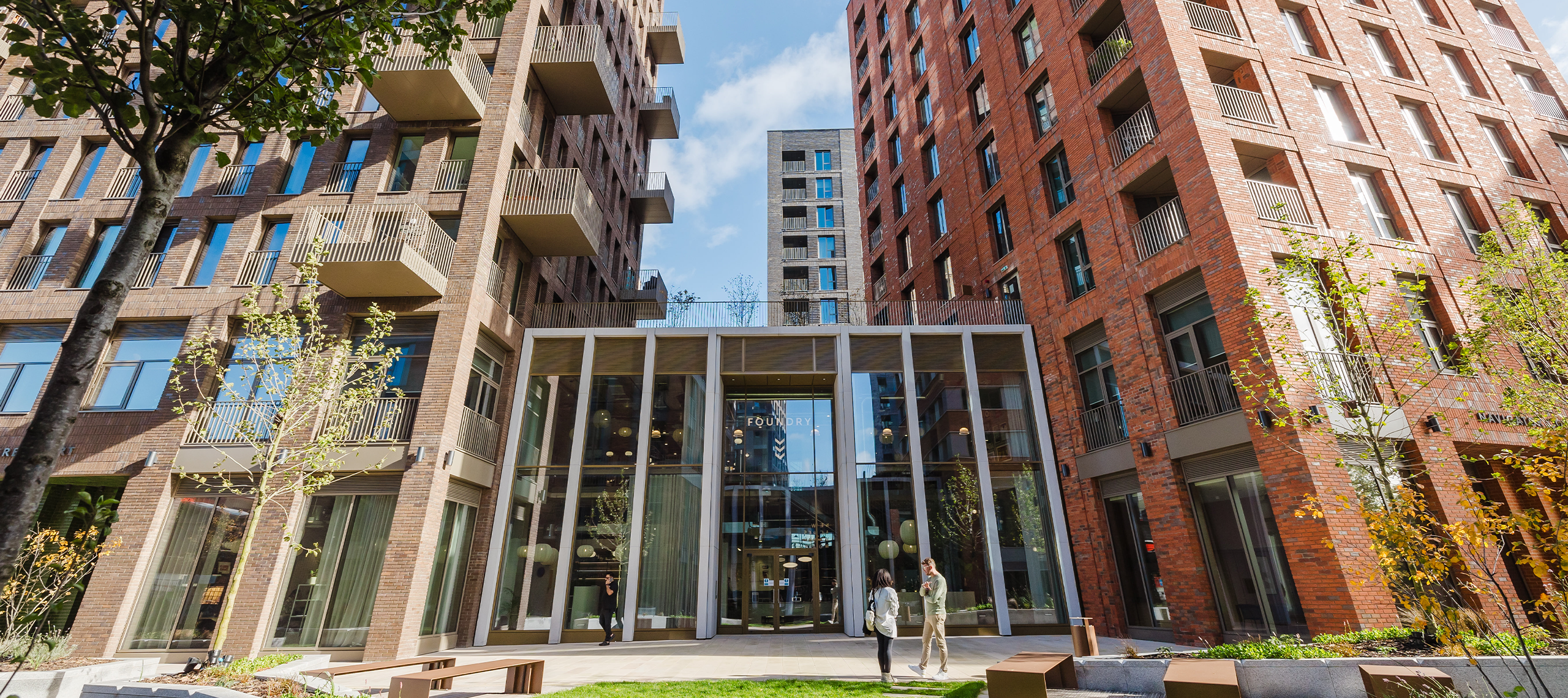
Legal & General’s New Acres development in Wandsworth exemplifies this approach in Wandsworth – a neighbourhood designed around live, work, social and retail uses, rather than treating each asset class in isolation. FOUNDRY Wandsworth sits within that wider New Acres context.
It wasn’t conceived as a standalone flex offer competing purely on desk price. It was designed to play a role in shaping how the neighbourhood functions and feels day to day.
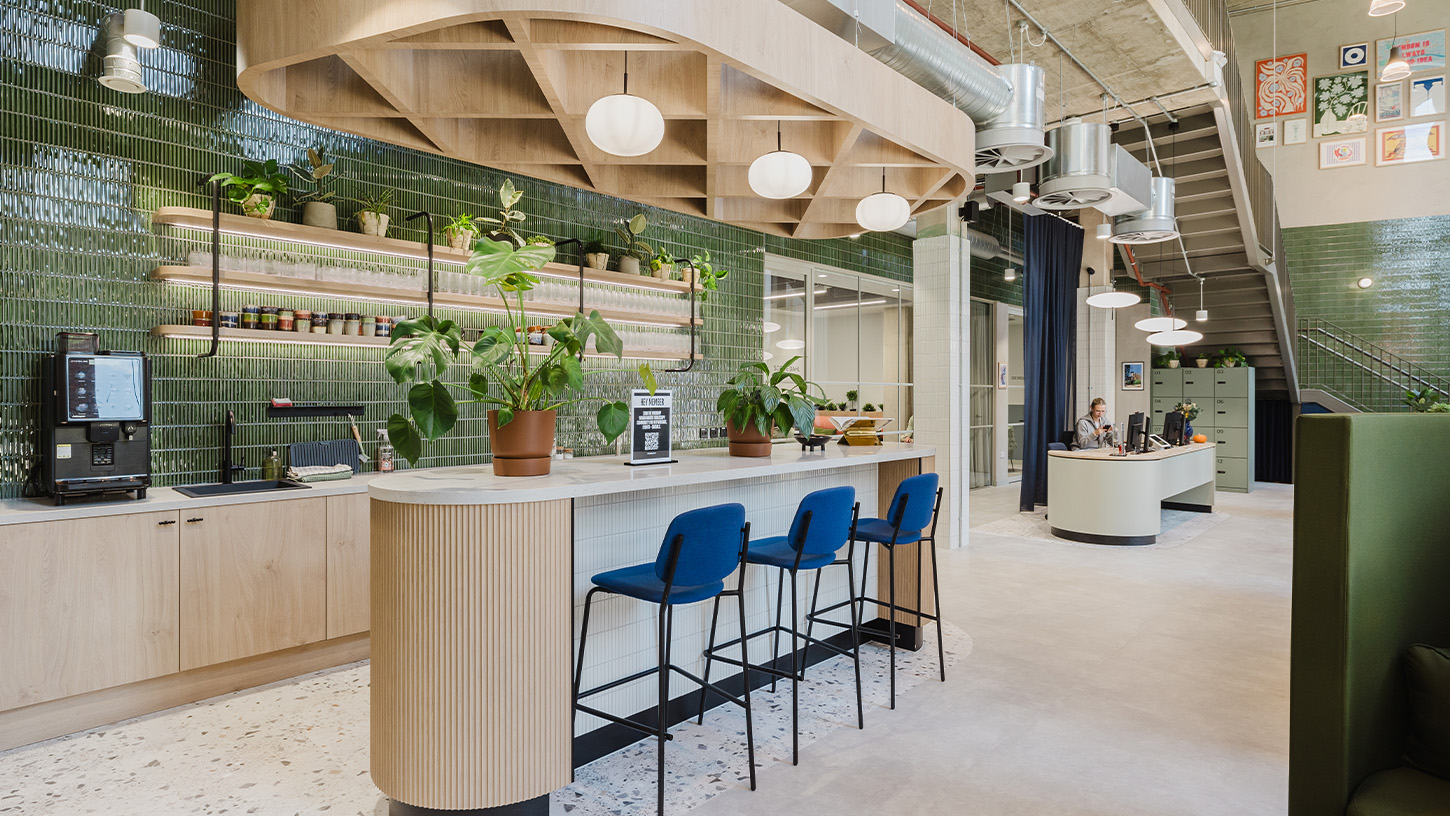
Community spaces sit at the heart of the project: a generous double-height reception, café, large communal areas and a central courtyard linking indoor and outdoor space. These areas are used throughout the day for focused work, informal meetings and events, creating consistent footfall and energy.
The appetite for the space reflects this. FOUNDRY Wandsworth reached 72% occupancy just six months after practical completion.
From an investment perspective, the lesson is clear. Workspace, when designed and delivered with intent, can activate ground floors, support adjacent uses and contribute to value beyond the office line on a rent roll. Crucially, the project was delivered with the design, cost and programme certainty institutional capital demands, completing ahead of schedule and allowing income to flow sooner.
Placemaking as a leasing accelerator, not a gamble
For landlords focused on performance, placemaking works best when approached as a phased strategy.
The most effective programmes follow a familiar sequence:
- Reset the threshold – a reception that feels calm, confident and efficient, with clear wayfinding and a service-led front-of-house presence.
- Introduce shared amenities – café and lounge spaces that work for daily use and broker events, alongside end-of-journey facilities that support ESG and wellbeing goals.
- Launch plug-and-play space – tenant-ready floors that cap occupier risk and act as live show suites.
- Activate consistently – broker tours, simple events and virtual walkthroughs that maintain momentum.
- Offer choice – fitted, Cat A and flex options that capture more of the demand curve.
According to Savills, buildings offering a mix of fitted, flexible and traditional space absorb faster than single-offer assets. Importantly, fitted space often pulls demand through the rest of the building, improving take-up on unfitted floors.
Crescent, Bristol: applying the same thinking regionally
This approach isn’t limited to London or large-scale mixed-use schemes.
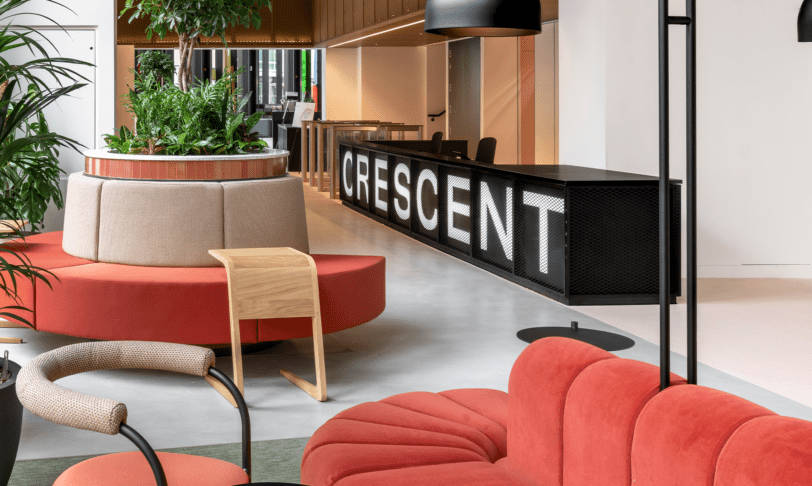
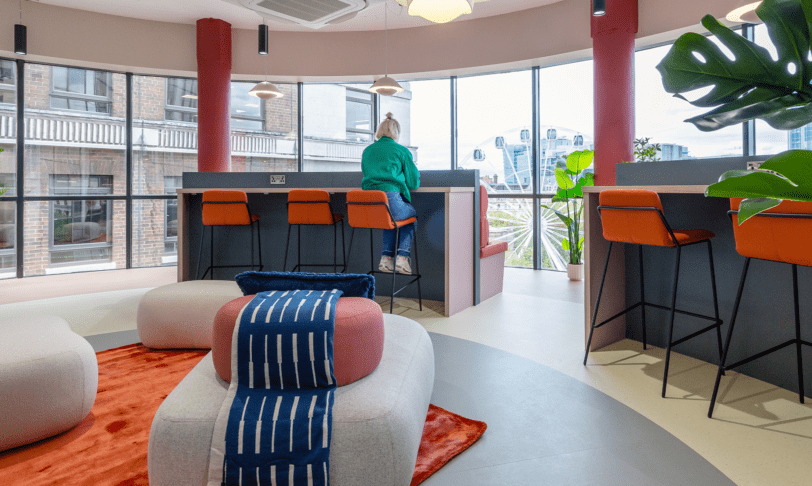
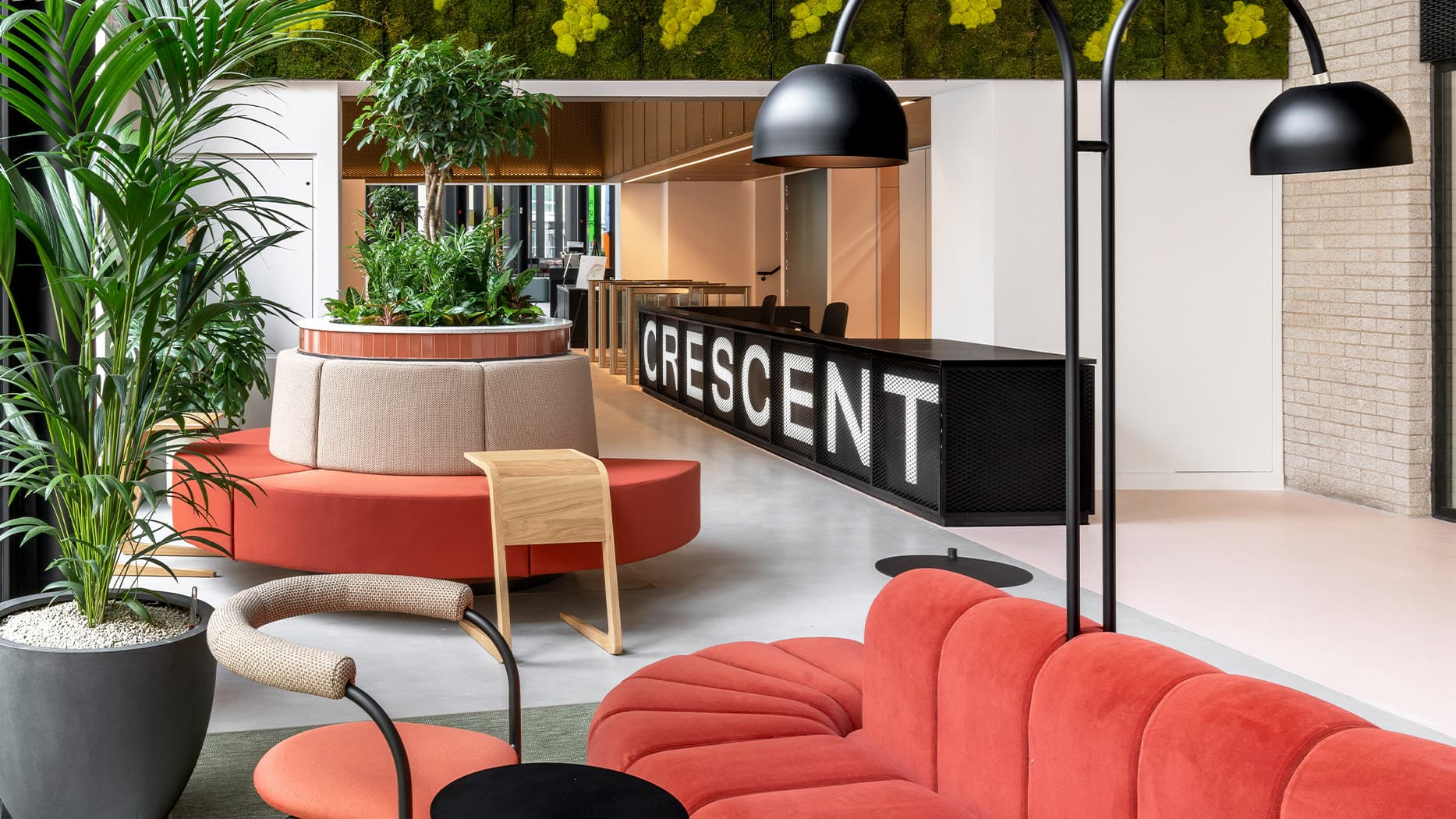
At Crescent, Bristol, CEG repositioned a tired office building as a people-centred workplace. The Ribbon – a sweeping, glass-fronted ground floor space – now acts as the social spine of the building, functioning as a shared hub for work, meetings and informal interaction.
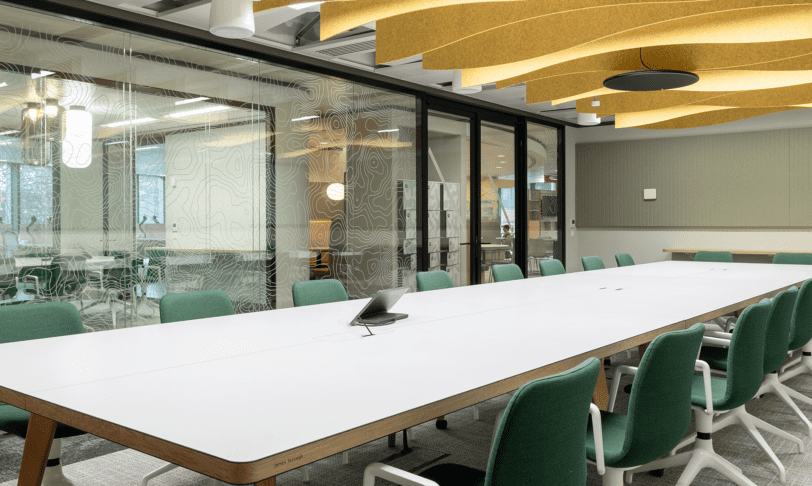
Investment in a café, gym and a strong front-of-house team reinforced that sense of community. Upstairs, five plug-and-play suites were delivered, fully furnished and ready to occupy, reducing time and cost for incoming tenants.
The results were commercial as well as cultural. At practical completion, 23% of space was pre-let. Within three months of opening, occupancy reached 40%. The combination of shared amenities and ready-to-let space reduced leasing friction and accelerated take-up.
Where placemaking still goes wrong
Placemaking is not without risk, but most pitfalls are strategic rather than financial.
Over-bespoke design that limits adaptability. Amenities without a clear use case. Rent positioning that confuses the market. Lease complexity that slows deals at exactly the wrong moment.
The strongest placemaking strategies prioritise flexibility, deliberate pricing between fitted and Cat A space, and streamlined leasing processes from the outset. They also track the right metrics – leasing velocity, void periods, ERV achieved, incentives and amenity utilisation – rather than relying on headline footfall.
The commercial case for placemaking
Placemaking is no longer a branding exercise or a response to market fashion. For many landlords, it has become a practical way to protect income, accelerate leasing and future-proof assets in a more selective market.
When approached with discipline, it becomes a practical toolkit for accelerating leasing, reducing risk and creating value that extends beyond individual floors.
If you’re exploring how placemaking could support leasing performance across your portfolio, get in touch with us. We work with landlords and asset managers to design and deliver placemaking strategies that are commercially grounded, phased intelligently and measured properly.