The new battleground for Bristol office assets
Bristol is one of the most interesting office markets in the UK right now.
Prime rents have pushed beyond the £50 psf threshold and remain much higher than rents in other key cities including Manchester and Birmingham. Grade A vacancy is at a historic low of 3.5% and there are no new office developments due to complete in 2026. Demand for high-quality space continues to outstrip supply. On paper, these are conditions landlords would normally celebrate.
And yet, leasing performance across the city is far from uniform.
Some buildings attract steady interest and convert quickly. Others – often with comparable specifications – struggle to build momentum. The gap is rarely explained by rent levels or floorplate quality alone.
Increasingly, Bristol assets are competing on something less visible but far more influential – the speed at which they can provide certainty.
Want to learn more about attracting and retaining tenants?
Read our latest whitepaper: Attracting Tenants: What Commercial Landlords Need to Know.
The Bristol leasing dynamic: a market driven by risk and velocity
Bristol deals have always behaved slightly differently to London.
The city’s occupier profile is heavily SME-driven. Requirements frequently sit below 5,000 sq ft. Decision-making cycles are compressed. Tenants are often balancing growth ambitions with tight operational timelines and capital constraints.
In this environment, friction matters.
The longer the gap between viewing a space and being able to imagine operating within it, the greater the risk of losing a deal. Delays tied to fit-out programmes, landlord works or design processes introduce uncertainty that many occupiers simply won’t absorb.
The result is a clear pattern. Buildings that reduce decision friction and accelerate occupation consistently outperform those that rely on traditional leasing models. Speed and usability have become critical competitive factors.
Placemaking, certainty and the velocity gap
Placemaking is often framed as a design or experience concept. In Bristol, its role is far more pragmatic.
At its most effective, placemaking functions as a leasing strategy – a way of making buildings easier to understand, easier to market and easier to occupy.
One of the most persistent challenges in Bristol leasing is what might be called the velocity gap – the “dead time” between initial interest and contractual commitment. Agents see this pattern repeatedly. Viewings happen, conversations progress, then momentum slows as occupiers wrestle with programme timelines, capital spend or the practicalities of moving in.
Certainty is what closes that gap.
Tenant-ready space, coherent arrival experiences and genuinely usable shared amenities all reduce decision friction. They allow occupiers to visualise themselves in the building quickly and move forward with confidence. Fitted and CAT A+ suites, in particular, remove delivery risk and compress decision cycles, materially improving viewing-to-offer ratios. Learn more about tenant-ready and managed offices here.
Importantly, these interventions are rarely isolated. The strongest-performing Bristol assets tend to follow a recognisable pattern, where perception, usability and leasing momentum reinforce one another.
This dynamic is best understood as a flywheel rather than a single upgrade – a sequence of decisions that progressively strengthens how a building performs in the market:
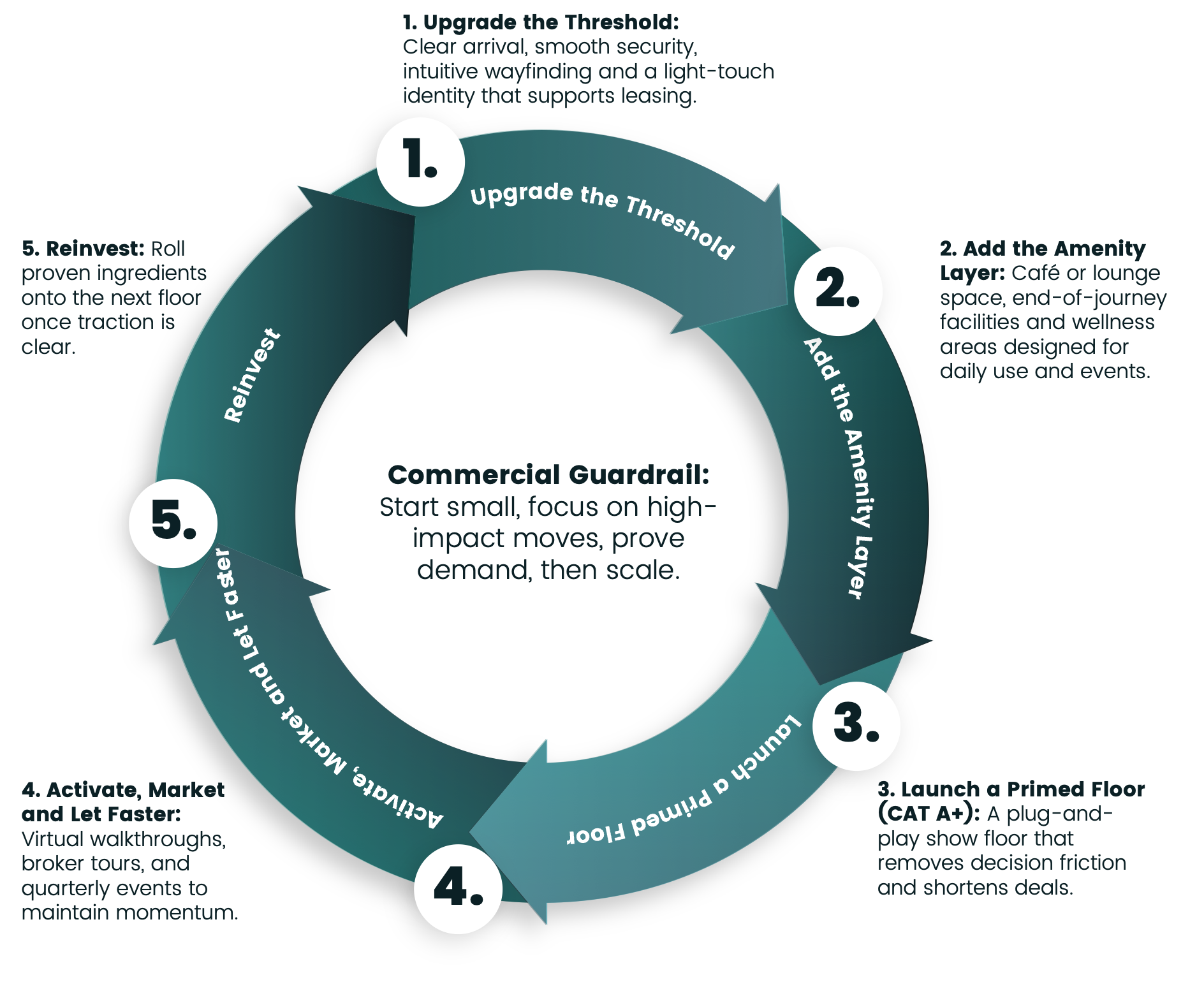
When these elements are delivered coherently, they shorten voids, reduce incentive pressure and help protect ERV across an asset. The critical distinction is intent. Successful placemaking programmes are designed around leasing outcomes, not aesthetic upgrades.
A Bristol playbook: prioritising early impact and leasing momentum
For landlords looking to reposition assets without large-scale disruption, phased placemaking programmes tend to perform best.
A typical Bristol rollout might follow a sequence such as:
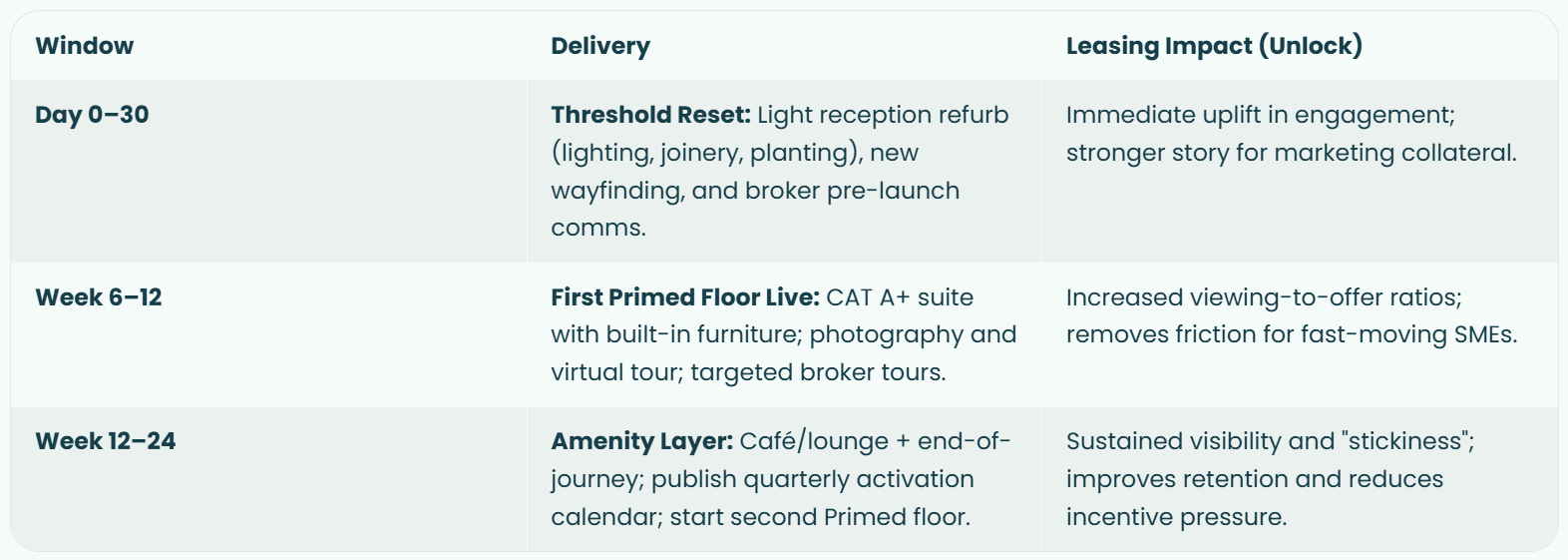
This approach prioritises early impact, protects ERV and builds momentum landlords can scale with confidence.
Aligning with Bristol demand
Bristol leasing performance is heavily influenced by product mix.
A blended offer allows landlords to capture a wider slice of demand while maintaining flexibility. In many assets, this means combining:
- Fitted anchor suites targeted at SME requirements
- Traditional CAT A floors for larger occupiers seeking control
- Selective flex or coworking elements where they strengthen the building’s identity
The common thread is certainty. Buildings that present clear, market-ready options consistently reduce negotiation friction and accelerate deal progression.
Case study: Crescent
Crescent provides a strong illustration of how placemaking thinking translates into leasing performance within the Bristol context.
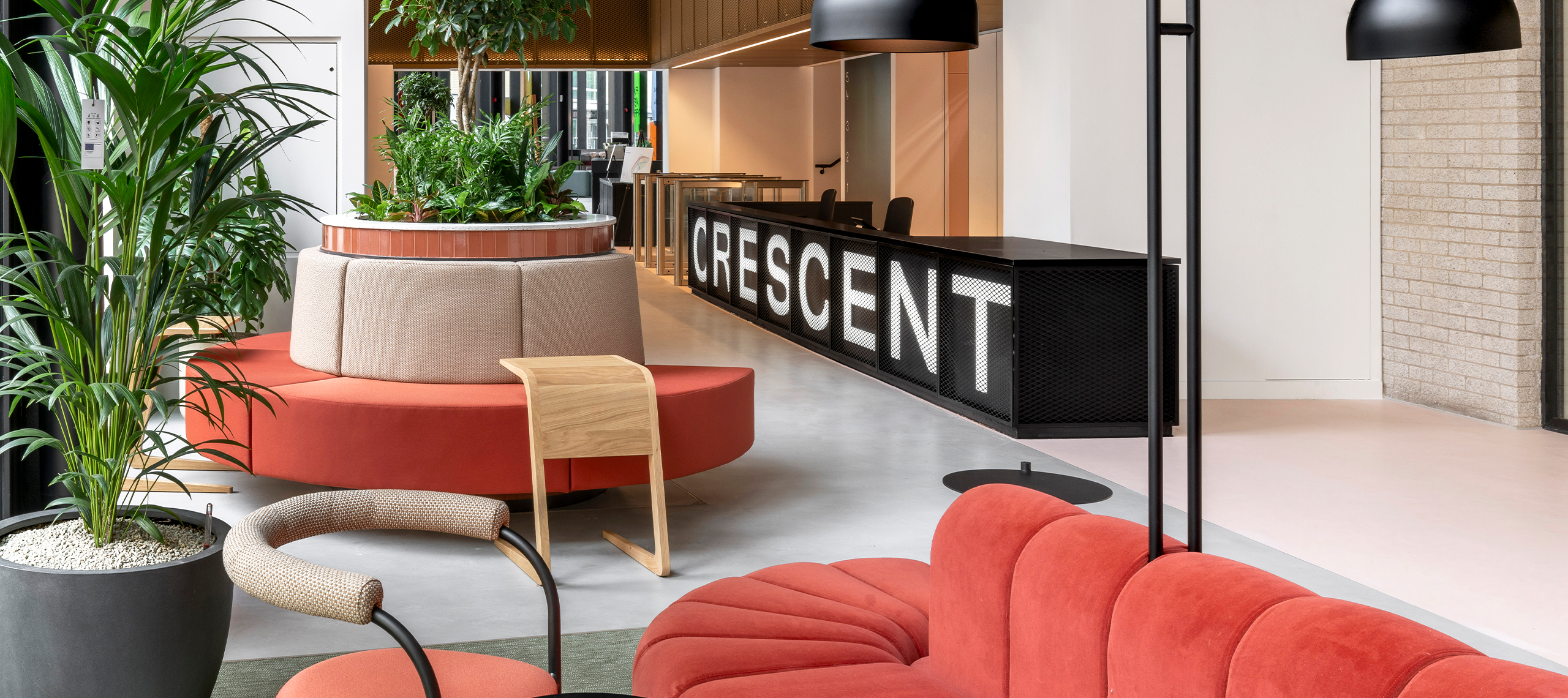
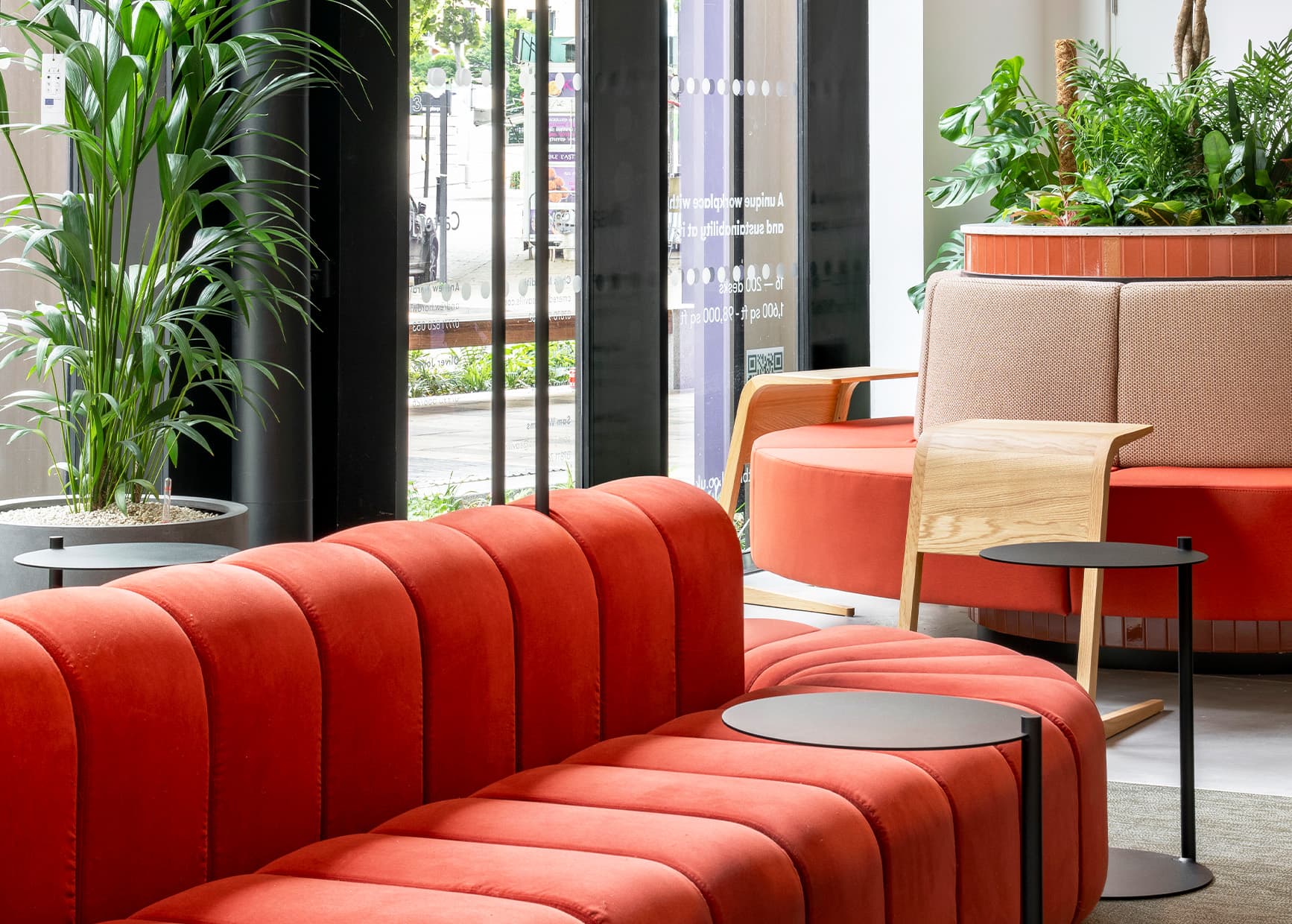
The redevelopment repositioned an outdated, 1970s building into a vibrant new coworking and social space, alongside ready-to-let suites. We worked with the CEG design team to introduce The Ribbon – a sweeping, glass-fronted ground floor environment designed as the building’s social spine.
Investment in a café, gym and front-of-house presence reinforced this identity. Upstairs, plug-and-play suites were delivered fully furnished and ready to occupy, directly addressing Bristol’s demand for speed and usability.
The commercial outcomes were clear. At practical completion, 23% of the space was pre-let. Within three months of opening, occupancy reached 40%. The combination of tenant-ready space and coherent amenity provision reduced leasing friction and accelerated take-up.
Case study: Assembly C
This shift in leasing dynamics is also influencing how new Bristol assets are conceived.
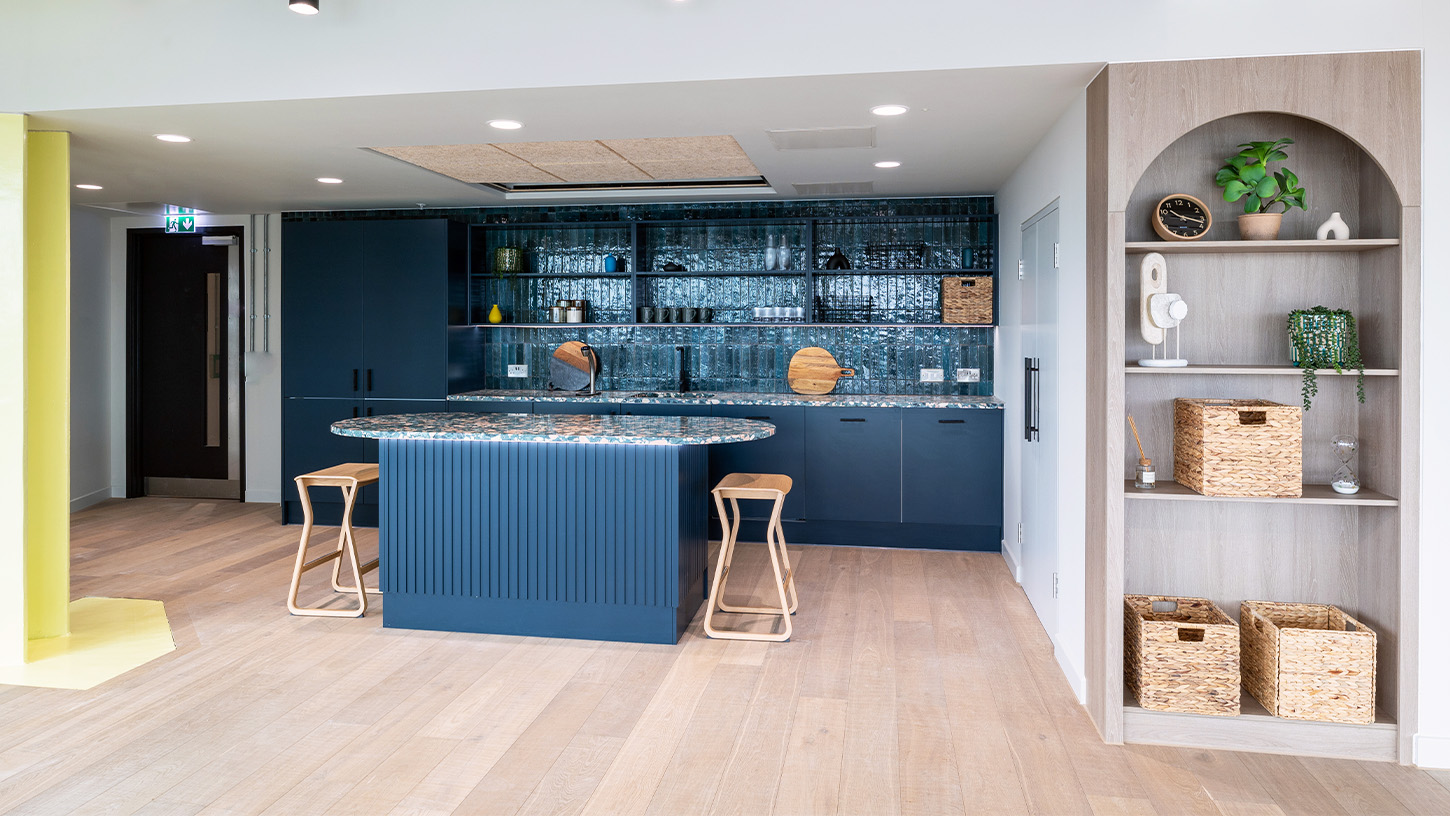
At Assembly C in Bristol’s Temple Quarter Enterprise Zone, AXA IM and Bell Hammer placed communal experience and flexibility at the centre of the tenant offer from the outset. Interaction were commissioned to design and deliver the Clubroom – a shared breakout and event space designed to support community, wellbeing and everyday usability.
Rather than acting as a passive amenity, the Clubroom functions as a flexible tenant hub, supporting events, exercise classes, informal work and occupier engagement. This reflects how Bristol landlords are embedding placemaking principles into assets at development stage, recognising that shared experience and adaptability now play a direct role in leasing competitiveness.
Activation, risk and long-term performance
Placemaking does not end with physical upgrades. Light-touch activation programmes help sustain visibility and maintain leasing energy, while careful commercial judgement protects flexibility and ERV.
Over-bespoke design, poorly positioned rents or excessive lease complexity can undermine the very velocity placemaking strategies aim to improve. The strongest programmes prioritise adaptability, deliberate pricing and phased investment models that scale alongside absorption.
Placemaking as infrastructure, not embellishment
In Bristol’s competitive landscape, placemaking is no longer about differentiation for its own sake.
It has become a practical mechanism for improving leasing velocity, reducing risk and protecting value in a market where occupiers are highly sensitive to programme certainty.
For landlords, developers and agents alike, the commercial logic is straightforward. Buildings that make decisions easier and occupation faster consistently perform better.
If you’re exploring how placemaking strategies could support leasing performance in Bristol, get in touch with our Bristol experts today.