Circular office fit-out: what it means (and how to do it properly)
Circular fit-out sounds technical, but it really isn’t. It based in a very blunt idea: use what already exists before you buy anything new.
In workplace design and build, that means reusing materials, repairing finishes, repurposing furniture and joinery, and choosing adaptable, built to last products that flex with your space. Done well, it cuts waste and embodied carbon without making the office feel like a compromise. Done badly, it’s an expensive mistake.
The shift it asks for is one of mindset. An office isn’t something to strip out and replace; instead think of it as a bank of materials, components and value you can extend, recover and reconfigure. This mindset shift is where the carbon and cost savings both come from.
Most of your fit-out’s carbon is decided before anyone picks a colour
Most waste is created early. If the brief assumes a full strip-out, the design follows. If the design assumes everything is new, procurement follows. By the time anyone asks what could have been kept, the skips are already booked.
So a circular fit-out starts with a review of the existing space before the design is locked, not to “look for savings”, but to find what already has value. A good review weighs condition, compliance, material value, visual quality, flexibility, future usability, safety, and the cost and programme implications of keeping versus replacing.
This is where the biggest carbon wins hide. Savills notes that more than half of a new build’s embodied carbon sits in elements like the substructure, frame and roof; the things a refurbishment keeps and a rebuild throws away. The same logic runs through an interior: the more you retain in place, the lower the carbon before you have specified a single new product. A circular fit-out is not a decorating style; it’s a sustainable way of making decisions.
Retain, reuse, repair, repurpose (in that order)
Circular fit-out is not just recycling. Recycling matters, but it sits near the bottom of the ladder because it breaks a product down instead of keeping it whole. A stronger order of operations is:
- Retain: keep what still works where it is.
- Reuse: move furniture, materials and products into the new layout.
- Repair: fix or refresh rather than replace.
- Refinish: update surfaces, upholstery and finishes to extend life.
- Repurpose: give an existing element a new job.
- Recycle responsibly: the route of last resort, when reuse genuinely is not possible.
This is not theory, and the numbers are real. When PLP Architecture treated its own London studio as a circular test bed, 92% of materials were reused or donated and embodied carbon fell by 75.4% against a conventional fit-out: 175.78 tonnes of CO₂ kept out of landfill, delivered at roughly a third of a typical London fit-out cost.
JLL reused more than 80% of the furniture in its Canary Wharf office by building circular principles into the brief from the start. Reuse isn’t a fallback. It is a design discipline that happens to cost less.
Circular does not mean second-hand
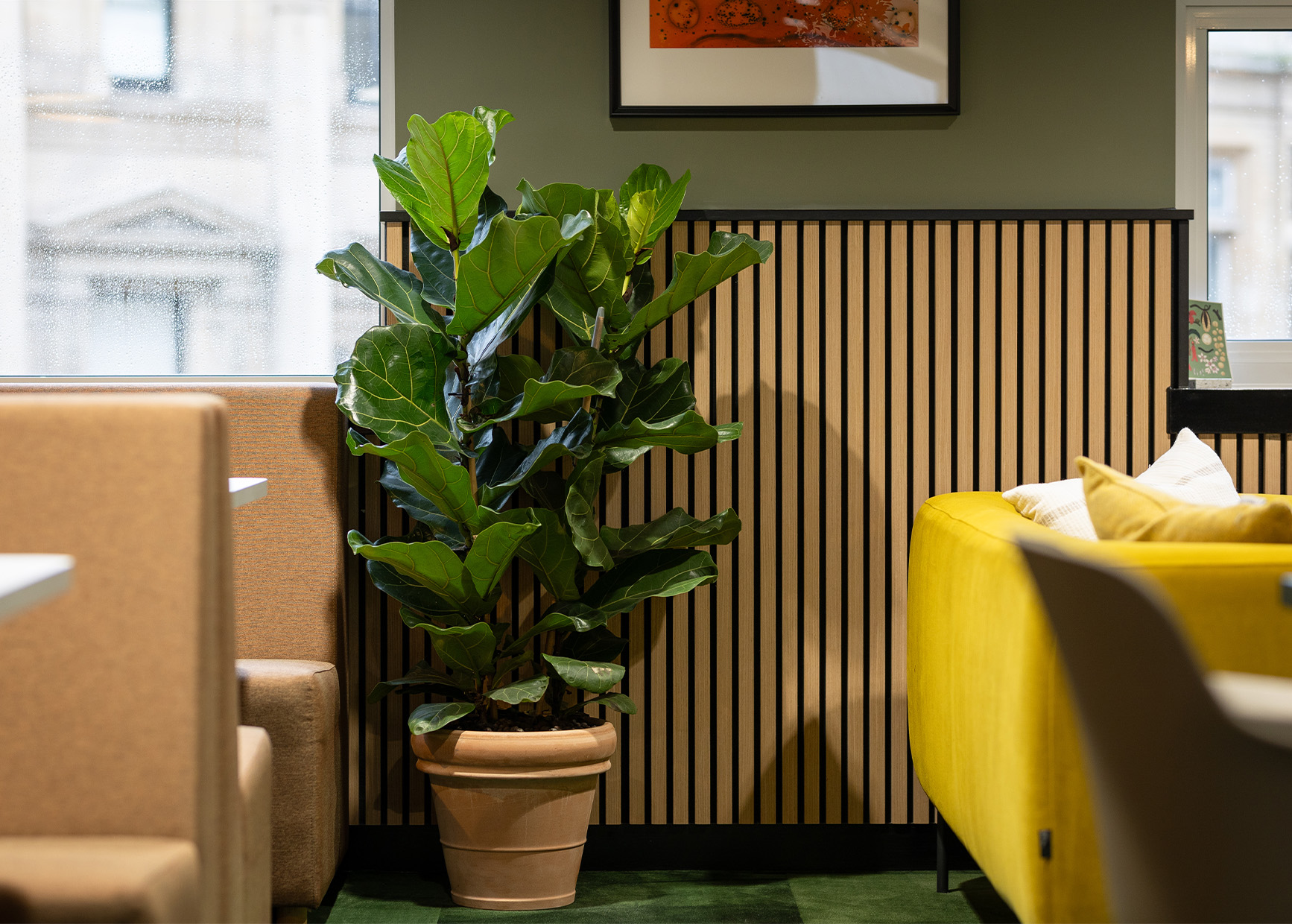
The biggest myth about circular fit-out is that it looks like compromise. It shouldn’t. A good circular workplace feels current, considered and well-made. The difference is that the design team has been honest about where value already exists, and where spending money is worthwhile.
In practice that might mean keeping a high-quality floor finish, refinishing existing joinery, reusing the desks and spending the saved budget on the few things people touch and notice every day. The space reads as design-led, not salvage.
There is a commercial edge here too. A fit-out specified for a short visual life dates fast, and dated space gets ripped out and paid for twice. Choosing materials that still look good after real use (not just on handover day) is the cheaper position over any sensible time frame. The circular office is usually the more considered one, not the cheaper-looking one.
Design for the next change, not just this one
Circularity is as much about what happens next as what happens now. The most sustainable fit-out is the one that doesn’t need ripping out in three years.
So, design for change from the start:
- Products that can be repaired
- Furniture that can be reconfigured
- Partitions that can move
- Materials that can be separated at end of life
- Suppliers that offer take-back
- Finishes that won’t look tired by the next refresh
A rigid fit-out forces replacement; a flexible one absorbs change. Designing for the next life is the part most briefs skip, but it’s the part that protects your investment.
Where occupiers win
For an occupier, circular fit-out does four jobs at once.
It cuts the carbon of workplace change: the thing your ESG report increasingly has to account for. Construction already generates 62% of the UK’s waste, and embodied carbon is on course to make up almost half of all new construction emissions between now and 2050 (Interaction 2024 Sustainability Report). The materials in your fit-out are a bigger part of that picture than most people assume.
It gives you a credible story, not a slogan: “we kept what was useful, repaired what we could, reused what had value and only bought what we genuinely needed” is something employees, clients and stakeholders can actually believe. People spot token sustainability instantly, and discount it just as fast.
It protects budget: reuse avoids buying and disposing twice, and a flexible fit-out pushes back the next big spend.
It tends to produce better workplaces: teams warm to offices that feel human and resourceful rather than glossy and disposable, and reuse preserves the character a full strip-out erases.
Landlords benefit too
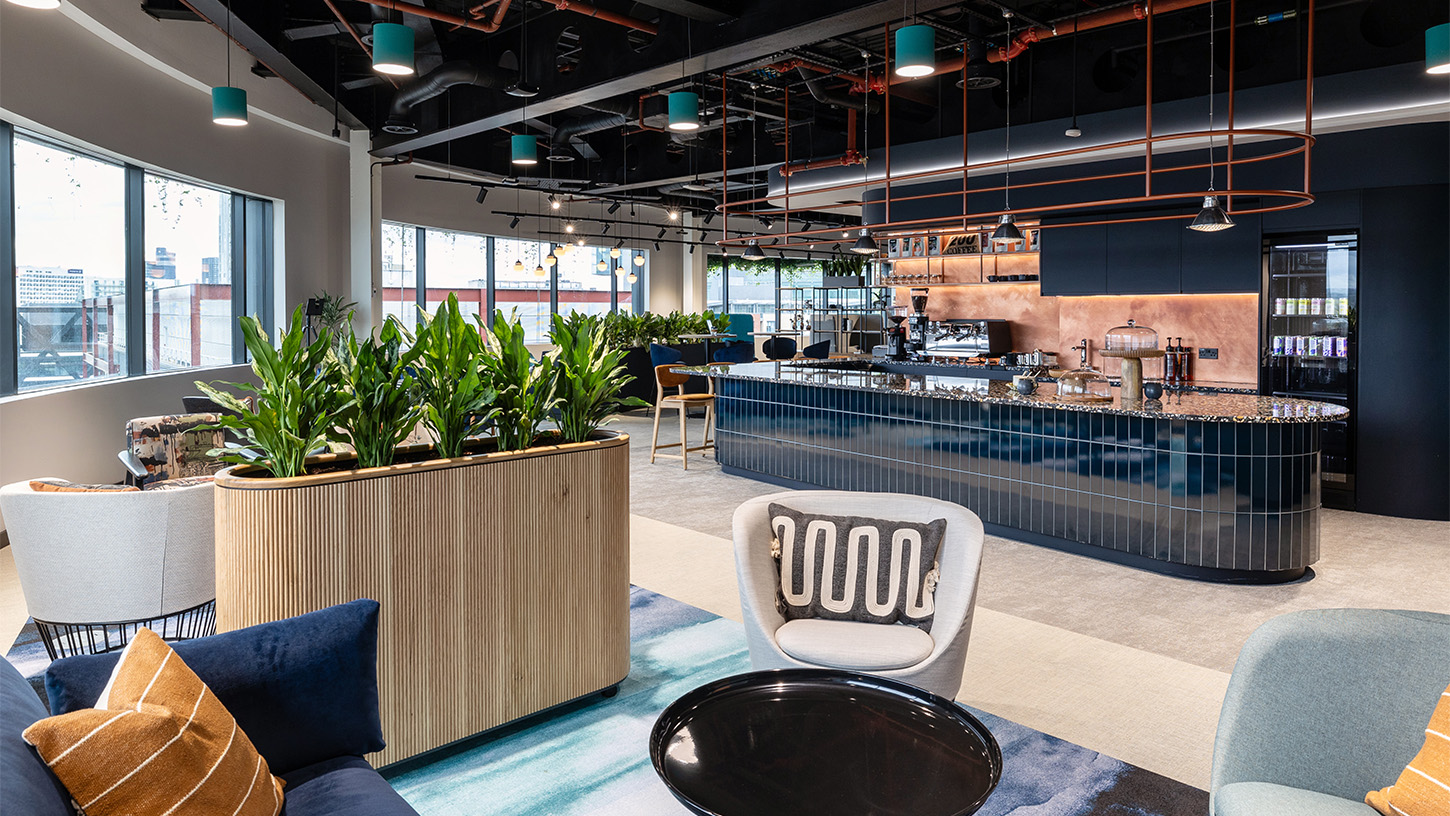
The same logic works at asset level. For landlords, circular fit-out supports ESG goals while keeping refurbishment commercially disciplined; less strip-out waste, protected material value, lower capex and more adaptable, lettable space. It suits assets that need repositioning rather than a full reset, and it signals a building being improved intelligently rather than emptied and refilled.
What good looks like
A real circular fit-out is a process, not a single tactic. The strong projects tend to include:
- A pre-design audit of the existing space
- A clear material inventory
- Reuse targets set early, before the design is fixed
- Supplier conversations about take-back, refurbishment and reuse
- Design that protects the most valuable existing elements first
- Specification that favours repairability, modularity and disassembly
- A waste plan that prioritises salvage and diversion from landfill
- A sense check on cost, compliance, maintenance and long-term flexibility
One test cuts through all of it: at every decision, ask “could this item, system or material serve a longer life – here or somewhere else?”.
Common mistakes
Circular fit-out fails in predictable ways.
- Leaving it too late– raise reuse after the design is fixed and the best options have already gone.
- Confusing recycling with circularity – recycling recovers material; reuse recovers value.
- Treating it as a look – reclaimed timber on one wall is styling, not strategy. The outcome is decided in planning, procurement and operations.
- Over-specifying new – buying what you could have repaired, refinished or reconfigured.
The strong projects avoid all four by starting with the existing space and designing around it.
How Interaction approaches circular design
We make circularity practical, not theoretical. Before we specify anything new, we look hard at what can be retained, reused or reimagined and then design around the best of it; balancing sustainability against compliance, quality, cost, programme and experience.
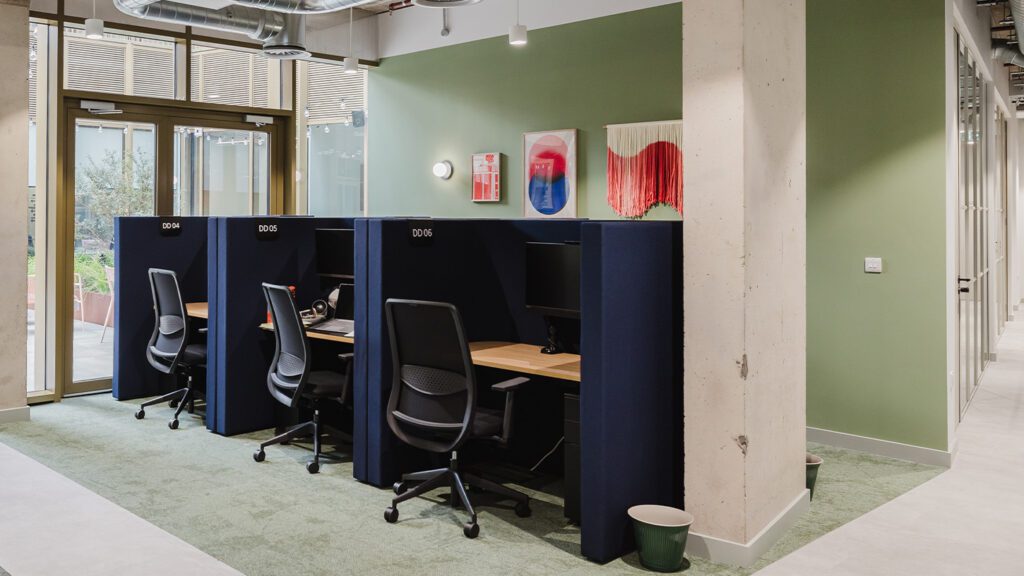
It shows up in the work. For TLT in Manchester, we kept existing meeting tables, desk frames and storage and had 1,600 acoustic desk screens reupholstered and repurposed rather than skipped, in line with the firm’s Net Zero 2040 commitment.
For Ecosurety, 99% of the furniture from the old office was reused, refreshed and reupholstered on a SKA Gold project.
At FOUNDRY in Wandsworth, 100% of construction waste was reused or diverted from landfill on a BREEAM Excellent, EPC A scheme (all from our 2024 Sustainability Report).
We track supplier EPDs through our own database so embodied carbon can be measured rather than guessed, and as a B Corp we’ve committed to keeping project-waste diversion at 99% whilst assessing embodied carbon on every project.
That is the essence of a circular fit-out done properly. No less ambitious, but shaped by better, more sustainable decisions.
Why this matters now
Workplaces are changing faster, sustainability expectations are rising, and clients are under more pressure to show measurable outcomes rather than good intentions. That makes circularity less of a nice-to-have and more of a sensible response to how offices actually change. The best projects now aren’t the ones that replace everything. They’re the ones that make the most of what exists, design for the next change and cut carbon without dropping the standard.
That is what circular office fit-out means when it is done properly. For the broader picture of how we approach lower-carbon workplace change, see our sustainable office retrofit approach.
FAQs
Is a circular office fit-out more expensive?
Usually the opposite. PLP’s circular studio was delivered at around a third of a typical London fit-out cost, because reuse avoids buying and disposing twice. The saving comes from spending selectively, not cutting quality.
What can be reused in an office fit-out?
Often more than people expect: furniture (desks, chairs, storage, soft seating), partitions and glazing, raised floors and ceiling systems, some flooring and finishes, lighting, joinery and feature elements – subject to condition, compliance and the new layout.
Is circular fit-out just recycling?
No. Recycling sits near the bottom of the hierarchy because it breaks a product down. Retaining, reusing, repairing and repurposing keep more value and save more carbon.
How much carbon can it save?
It depends on the project. PLP’s circular studio cut embodied carbon by 75.4%; at building level, Savills puts deep-retrofit savings at 40–70% versus redevelopment.