What do Gen Z want from the workplace?
The conversation around Generation Z has matured quickly. No longer the “new arrivals”, Gen Z employees are now embedded across organisations, shaping workplace expectations rather than simply reacting to them.
In the UK, Gen Z already represent a significant and growing share of the workforce – 27% of today’s workforce, expected to rise to 70% by 2023 – with younger employees influencing everything from technology habits to attitudes towards flexibility, wellbeing and career development. For employers, the question is no longer how to accommodate a future generation, but how to design workplaces that work for people whose expectations have been formed in a very different world of work.
While generational labels are always imperfect, patterns do emerge. The key is understanding them without sliding into stereotype.
Moving beyond generational clichés
Conventional wisdom says if you’re a Gen-Z, you’re a digital nomad running a TikTok account as a side hustle, you prefer to avoid all social contact (unless it’s an Insta DM) and you never intend to step foot in an office. Of course, if you’re a Baby Boomer (those born between 1946 and 1964), you live at work, can’t text and refuse to tolerate change.
Evidently, as workplaces become increasingly age-diverse, we are overgeneralising the generations; a behaviour which is likely to drive wedges among co-workers, generate miscommunication and hinder organisational progress.
Workplace preferences are shaped by far more than age alone. Career stage, role, personality, home environment and organisational culture all play a part. What matters most is not treating generations as fixed personality types, but recognising broader shifts in how people relate to work itself.
And one of the clearest shifts is this: younger employees tend to view work as an activity, not a location.
Optimism with agency
The story of Gen Z in 2026 is not that they reject work. It is that they want work that helps them grow and make progress.
Recent research from PwC in the UK shows Gen Z professionals are twice as optimistic about their career prospects and progression as their Gen X peers. They are also the generation most likely to say they look forward to going to work. At the same time they are the most likely to consider taking action in the next year, whether that means seeking greater pay, better rewards or a new opportunity. This combination of optimism and agency is significant because it shows younger workers are motivated, but demanding about the conditions under which they will stay.
Learning and development in a hybrid world
Learning sits at the centre of Gen Z’s workplace expectations.
Across the wider workforce six in ten workers say they have access to the learning resources they need, and over half report learning career relevant skills in the past year. Younger employees, however, are nearly twice as likely as older colleagues to be actively upskilling. This shows that development expectations are high and that Gen Z prioritise growth.
But here’s the catch: a lot of learning still happens through informal interactions — quick questions at the desk, overheard conversations, spontaneous problem solving with more experienced colleagues. When hybrid working reduces these opportunities, early-career employees can miss out on the relational learning that once came as a by-product of presence.
Hybrid working itself is now widespread. According to the Office for National Statistics around 28% of working adults in Great Britain were hybrid working in late 2024. But interestingly, younger workers are not the most hybrid group. Early 2025 data shows only 19% of 16 to 29 year olds were hybrid workers, compared with 36% of those aged 30 to 49. This suggests younger employees are still spending substantial time in the office but not necessarily with consistent access to the people they need to learn from.
In other words, hybrid working delivers flexibility but can fragment learning pathways. Organisational design needs to respond by creating spaces and routines that support shared experience, not just desks you show up to.
Work, home and the case for connection
Gen Z’s relationship with work cannot be separated from the social context in which they live. In the UK many younger adults continue to house share or live with family due to affordability pressures. This reality makes working from home less attractive or practical for some, especially if private, comfortable workspace is limited. Shared or communal living spaces can also mean remote working increases isolation rather than reducing it.
That ties into a broader pattern around mental health and connection. Recent UK research suggests that younger adults report higher levels of loneliness and stress than older cohorts, with a significant proportion saying they often feel isolated. This is not surprising when we consider that many started their careers during periods of disruption and that informal social and workplace interactions were reduced during pandemic lockdowns.
All of this adds up to a clear insight. Gen Z value connection and community. If the workplace can provide genuine social and professional connection — not just a desk — it becomes a place that supports wellbeing, learning and belonging, alongside productivity.
AI and the disappearing entry ladder
Another underexplored trend is the impact of automation and artificial intelligence on early-career roles. Analysts and workforce commentators increasingly warn that technologies such as AI are automating many of the traditional entry-level tasks that used to serve as onboarding tools for new talent.
Where previous generations might have learnt foundational skills through repetitive or structured work, AI can now complete many of those same tasks before the employee has a chance to practise them. Rather than reducing work for good, this trend can mean that learning opportunities shrink just as the demand for sophisticated skills grows.
This creates a paradox: employers want people who can contribute quickly. But if the work that once enabled new joiners to learn by doing is automated away, where exactly are they supposed to get that experience?
There is not a massive body of published data on this yet, because it is unfolding in real time. But workforce analysts and recruiter networks are increasingly pointing to the need for intentional, structured learning paths to make up for the gap that AI has created.
In other words, informal learning can no longer be assumed. It needs to be designed.
The office still matters
Contrary to the simplistic “Gen Z hates the office” trope, when younger employees say they look forward to going to work, they are often referring to the connection, collaboration and learning opportunities the office can provide.
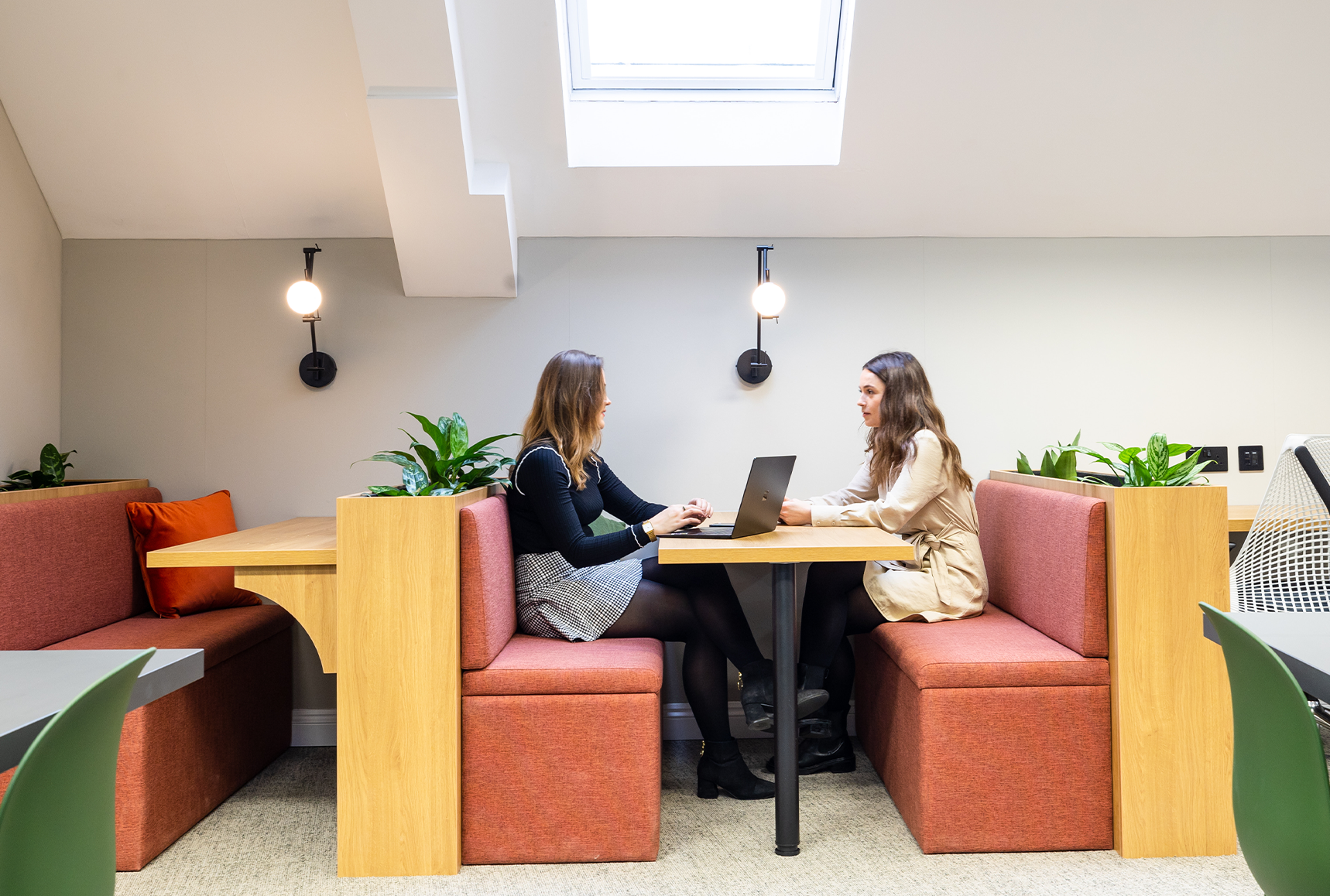
For many, the office remains one of the few places where mentoring happens naturally, ideas transfer quickly and people build networks outside scheduled meetings. Time in the office is valuable when it accelerates learning, allows for real human connection and supports growth.
For employers, the practical task is not to force presence but to ensure that time in the office is worthwhile – offering opportunities that remote working alone cannot easily provide.
What Gen Z really want
Connectedness. Opportunities to be around people who can teach them, challenge them and model career behaviours. Being physically present for learning should feel purposeful, not random.
Clarity. Visible pathways for progression, with milestones, feedback and opportunities to practise skills, not just courses.
Choice. Autonomy over how work gets done, paired with the structure that makes hybrid work sustainable rather than isolating.
Purpose. Belief that the work they do matters and connects to something broader than themselves.
For many companies, this means rethinking what the office is for. The most successful workplaces today are not spaces people go to just to sit. They are environments designed to support growth, connection and learning.
That can include:
- Informal mentoring spaces
- Visible team zones where learning happens naturally
- Areas designed for cross-functional collaboration
- Quieter spaces for reflection and deep work
- Social areas to build community
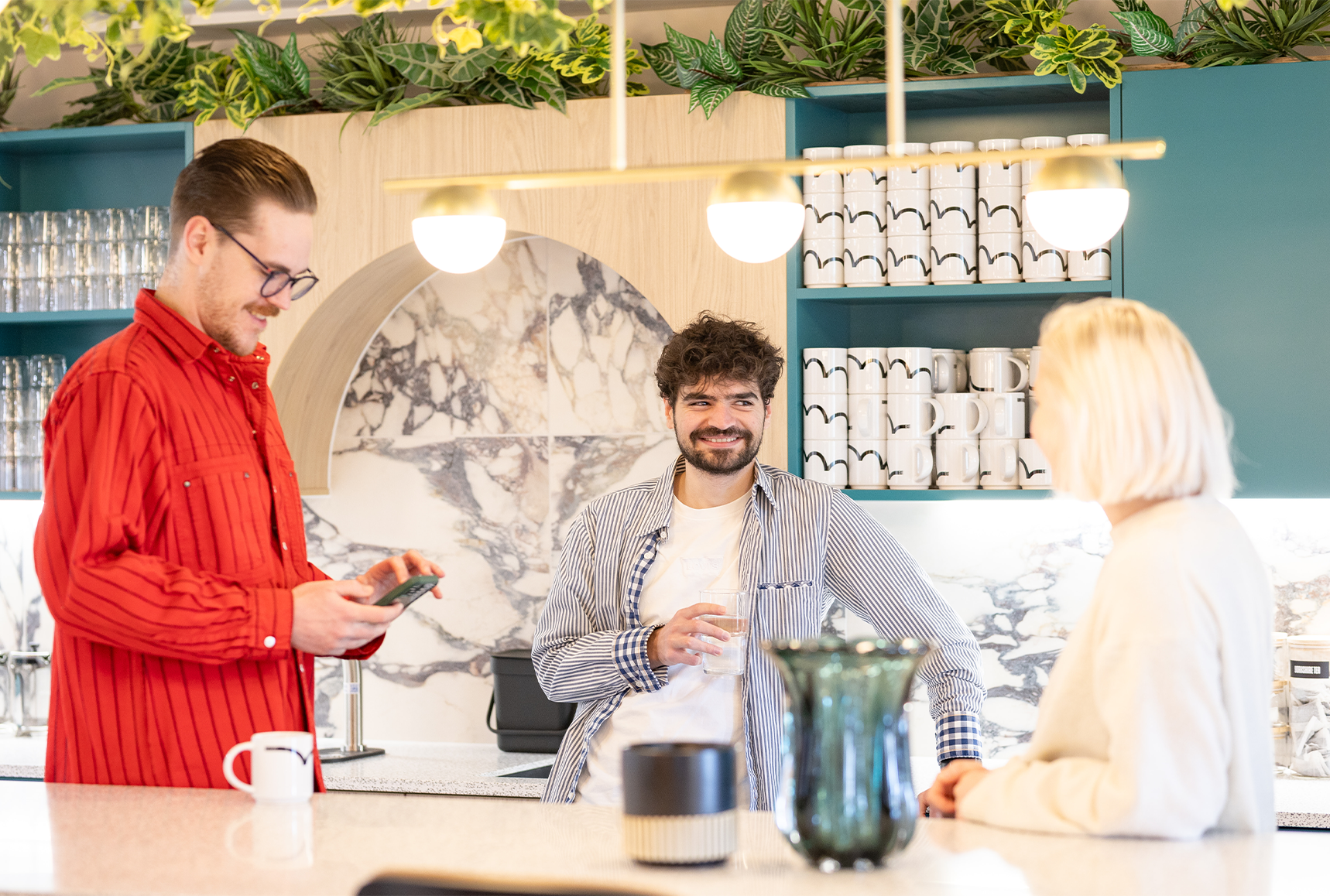
- Wellbeing spaces such as yoga studios and wellbeing rooms
These approaches benefit not just younger employees, but everyone. Designing for human experience rather than generational assumptions tends to produce workplaces that feel more supportive, purposeful and effective.

Gen Z: a growing force in the workplace
Gen Z are not a trend. They are shaping what work looks like now and into the future. Their optimism about careers, combined with a need for connection, clear progression and real learning opportunities, tells us something important about the modern workplace.
Workplaces that support growth, visibility and belonging will attract and retain talent not just from one generation but across the workforce.
If you are thinking about how your workplace design can support development, connection and performance, Interaction would be glad to help you imagine an environment that truly works for the people who use it.
If you’d like to find out how Interaction’s office design and office fit-out services can help you attract and retain great employees of any generation, get in touch.