How sustainable design boosts the bottom line for asset managers
No longer limited to eco-firms and ‘do-gooders’, in real estate, sustainability has become central to value creation. For asset managers, the pressure is clear: regulation is tightening, occupiers expect more, costs are rising, and ‘green’ assets are outperforming their less sustainable peers. The result? Good sustainable design is now one of the best levers for profit, resilience and long-term value.
The growing emphasis on ESG in real estate
ESG isn’t optional anymore. Investors, occupiers, regulators – everyone has their own targets to meet and expects ESG excellence. Many companies are now holding themselves to a net-zero targets, and need a workspace that reflects that. 60% of UK landlords are reporting a rising demand for green/sustainable buildings, and 92% of landlords reporting a willingness from tenants to pay more for sustainable spaces. According to Knight Frank, 63% of surveyed investors say enhanced returns are a key driver of their ESG strategy.
Learn more about net-zero offices here.
Regulatory risk is also looming large. In the UK, many commercial properties currently fall below what’s likely to be required by future Minimum Energy Efficiency Standards (MEES). By 2027 all leased non-domestic buildings must have a EPC C rating, rising to ECP B by 2030.
By 2027 all leased non-domestic buildings must have an EPC C rating, rising to EPC B by 2030. Many landlords are taking practical steps to upgrade older stock to meet these standards. Switching to green energy suppliers, installing solar panels or EV chargers, and investing in sustainably sourced fit-outs not only attracts eco-conscious tenants but also reduces operating costs and helps futureproof assets against regulatory change.
Market and regulatory pressures driving sustainable design
Workplace design has a measurable impact on collaboration and innovation. Research environments must balance flexibility with highly specific technical requirements, often evolving rapidly as scientific focus shifts. Current priorities such as personalised medicine, oncology and neuroscience all require different lab configurations, yet companies need spaces that can adapt quickly to emerging scientific developments.
Crucially, workplaces also need to support a diverse workforce. Nearly half (48.1%) of life sciences employees identify as neurodivergent (whether autism, ADHD, dyslexia and other cognitive differences), which is more than double the global average (20%). Yet, as The Times recently reported, many labs are not designed with neurodiverse scientists in mind, creating environments that feel overwhelming or inaccessible.
Inclusive design can transform this:
- Reducing sensory overload through lighting and acoustics
- Providing quiet, restorative spaces alongside collaboration zones
- Intuitive and clear wayfinding
- Offering flexibility so individuals can choose where and how they work best
Many companies are increasingly recognising neurodivergent talent as an advantage for innovation. Leading firms like SAP and GSK have adopted neurodiversity hiring initiatives, finding that neurodiverse teams offer fresh perspectives and enhanced performance in specialised tasks.
This isn’t about compliance or good intentions. Neurodiverse talent often brings exceptional strengths in areas such as pattern recognition, problem-solving and creativity – qualities at the heart of scientific discovery. Designing for inclusivity directly supports innovation.
The role of AI and technology in shaping space
Rising energy costs make inefficiency expensive. Asset managers are seeing bills rise by 50% or more, with some reporting increases of 70% in recent years – these are direct hits to operating margins. At the same time, regulatory standards are tightening. Buildings that fail to meet minimum energy performance requirements risk becoming harder to lease or sell, and retrofitting them later can be costly.
Investors and occupiers are also driving change from the demand side. Certifications, transparency in ESG reporting, and green leases are increasingly part of due diligence. Buildings with strong sustainability credentials are more attractive to tenants and investors alike, improving retention and occupancy while also strengthening long-term asset value.
Financial benefits
Here are the ways sustainable design translates into dollars (or pounds).
Lower operational costs through energy efficiency
- Efficiency upgrades (LED lighting, smart controls, optimised HVAC / BMS systems) can yield substantial savings even before big capital works. For example, Knight Frank-managed portfolios saw total energy consumption drop by around 18%, and carbon emissions down ~29%, over a five-year period from targeted optimisation and electrification measures.
- In a 100,000 sq ft office, moving from typical practice (50th percentile) to good practice (25th) on energy intensity can save tens of thousands of pounds per year in energy costs.
Enhanced tenant demand for certified sustainable space
- Occupiers increasingly prefer (and often require) certified sustainable buildings (BREEAM, LEED, WELL etc). These programmes provide assurance of quality, and often correlate with better working conditions, lower utility bills, better health & wellbeing etc. These factors improve tenant satisfaction and retention.
- Green building certifications also tend to yield rental premiums. According to CBRE, office buildings with sustainability certifications in Europe can expect rent premiums over their non-certified peers.
Learn more about sustainability certifications here.
Increased asset valuation and marketability
- Efficient assets are outperforming inefficient ones. CBRE’s Sustainability Index tracked over 1,000 UK commercial assets: between Q1 2021 and Q2 2023, “efficient” assets (EPC A-B) had far better capital value growth than “inefficient” ones in the office sector.
- Energy efficiency often commands a sale or rental price premium. The IEA reports that for commercial buildings, sales price premiums for higher energy performance are often in the 13-20% range.
- Investors are increasingly acquiring poorly performing assets with the express intention to retrofit and reposition them. In so doing they capture value both through improved income streams (rent), lower costs, reduced regulatory risks.
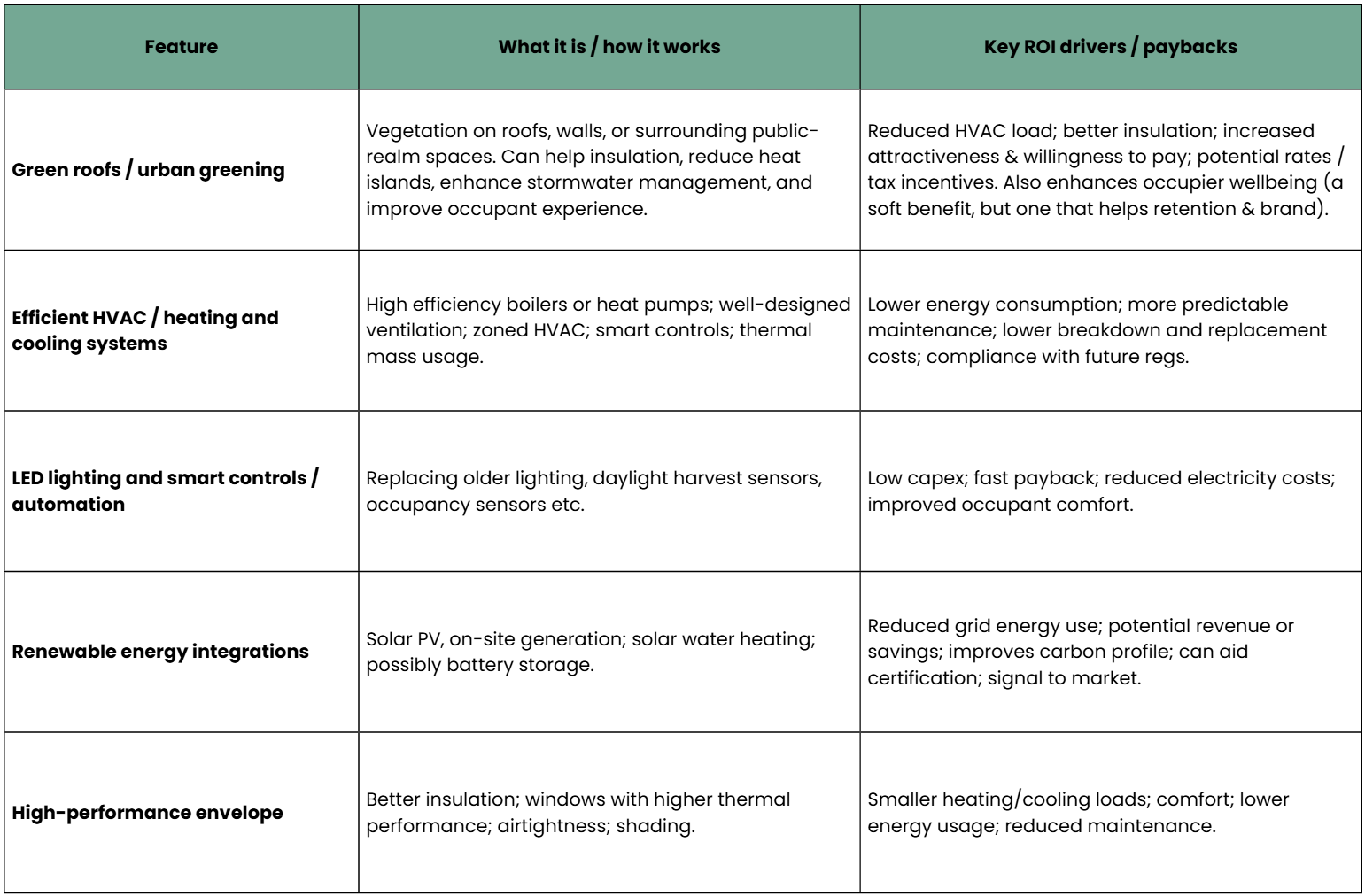
Sustainability features with ROI
Here are specific sustainable design features that tend to give strong return on investment, and how to think about certification.
The role of certifications
Certifications provide credible third-party validation of a building’s sustainability performance, which can be valuable for marketing, attracting tenants, and during due diligence. They typically cover multiple dimensions, including energy, water, materials, wellbeing, and indoor environment quality, giving a more holistic assessment of a building’s performance. Properties with strong certifications often benefit from higher rent premiums and stronger occupier demand, while also making it easier to comply with regulatory frameworks. A CBRE survey found that 79% of respondents believe green building certifications have a direct impact on real transactions, influencing premiums or discounts on rents and sales.
Case study: FOUNDRY Wandsworth
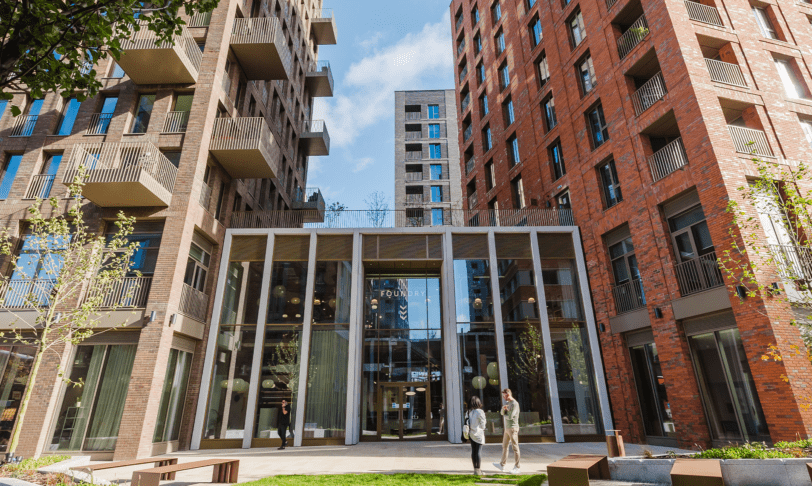
Part of Legal & General’s New Acre’s development, FOUNDRY Wandsworth demonstrates how sustainable design can drive strong early performance. Built to BREEAM Excellent standards with an EPC A rating and SKA Gold certification, the coworking space features energy-efficient systems, FSC-certified timber, and low-VOC materials, all reflecting a commitment to environmental responsibility. From day one, the space has proved immensely popular, achieving 72% occupancy just six months after practical completion, highlighting how sustainability can directly support strong financial returns. Check out the full case study here.
Aligning sustainability with profitability as a long-term strategy
For asset managers, sustainability should not be treated as a cost centre. Instead, it should be embedded into acquisition strategy, asset appraisal, and operational planning. By using data to map current performance, identify low-hanging fruit, and model paybacks, asset managers can prioritise upgrades that deliver the strongest return.
Engaging tenants through green leases and shared savings initiatives further enhances performance and retention, while planning for future regulatory requirements reduces the risk of stranded assets. Treating sustainability as an integral part of long-term portfolio strategy ensures stronger returns, resilience, and marketability.
Final thoughts
Sustainable design delivers real financial benefits. It lowers operating costs, makes buildings more appealing to tenants, increases asset value and reduces regulatory risk. Reducing operating costs, attracting and retaining tenants, enhancing capital value, and staying ahead of regulatory risk all point to one truth: sustainability = profitability. As markets evolve, those who embed sustainability into their strategy will capture outsized returns, enhance portfolio resilience and leave behind assets nobody wants.
At Interaction, we help asset managers turn sustainability into measurable value, from energy-efficient upgrades to certified fit-outs. Get in touch to see how we can futureproof your buildings and boost their performance.