Age-inclusive office design: is your workplace getting the details right?
A well-designed workplace should work for people at every stage of their career. But as the UK workforce ages, are our offices keeping up?
From door handles and lighting to meeting room technology and temperature control, small design decisions can have a significant impact on how comfortably people can use a space.
Age-inclusive office design considers these details from the outset, helping businesses create workplaces that support employees with different physical, sensory and cognitive needs.
Why age-inclusive design matters
People aged 50 and over make up nearly a third of the UK workforce, and according to the Department for Work and Pensions, the average age of exit from the labour market reached 65.8 for men and 65.1 for women in 2026.
As working lives extend, workplace design needs to account for a wider range of abilities, requirements and experiences.
Importantly, ageing doesn’t mean disability, and not every older employee will have the same needs. Age-inclusive design is about recognising that people’s requirements vary and creating workplaces with enough flexibility to accommodate them.
The workplace barriers hiding in plain sight
We’ve made important progress in recognising neurodiversity and wellbeing in office design, but age inclusion doesn’t always get the same attention, and some of the most significant barriers aren’t actually particularly obvious.
A heavy door that becomes difficult to open for someone with arthritis, a meeting room with no hearing assistance technology, or lighting that looks atmospheric but makes reading signage unnecessarily difficult. These might seem like minor inconveniences, but when employees encounter them every day, their impact adds up.
And while these examples can become more relevant as people age, they’re not exclusively challenges for older workers. Designing around a wider range of physical, sensory and cognitive needs makes workplaces more usable for everyone.
The question is whether we’re giving these details enough thought before an office is built.
What does an age-inclusive workplace need to consider?
Inclusive design isn’t just about providing accessible entrances or meeting minimum building regulations. It requires a closer look at how people experience a workplace throughout their day.
Consider the everyday journey through an office. Opening a door, finding a meeting room, following a conversation, making a coffee, adjusting to the temperature or using a new desk booking system.
Each interaction involves a design decision, and each presents an opportunity to either make the workplace more accessible or introduce an unnecessary barrier.
Is your next fit-out missing something important?
Download our official age-inclusive design checklist today.
Key areas to think about
There are several areas where greater consideration can make a difference.
The details we touch every day
Doors, handles and shared kitchen facilities might not be the most exciting part of an office design brief, but they’re among the things people interact with most frequently.
For employees experiencing changes in grip strength or dexterity, the difference between an easy-to-use fitting and an awkward one can be considerable.
Spaces where everyone can participate
Meeting rooms are central to collaboration, yet good acoustics and expensive audiovisual technology don’t automatically make them accessible.
For employees with hearing loss or changing vision, the way a room is designed and equipped can affect their ability to participate fully.
Comfort that accommodates different needs
Lighting, temperature and access to quieter spaces can have a significant impact on everyday comfort.
Menopause is a particularly important consideration. Research cited by CIPD in 2023 found that among working women aged 40–60 who had experienced menopause symptoms, 17% had considered leaving work due to a lack of support, while a further 6% reported having left.
While organisational policies are important, the physical workplace also needs to support the people those policies are designed to help.
Technology that works for everyone
Introducing new workplace technology can create opportunities, but it can also introduce barriers. From room booking systems to digital controls, accessibility needs to be considered alongside functionality, and when working practices change, employees need the right support to adapt.
These examples only scratch the surface. The challenge is knowing which details to question, what to include in a specification and how to avoid overlooking them during a fit-out.
How can you meet the needs of your team?
The best way to understand what your team needs from inclusive design is to give everyone a choice in how they share their experiences.
Not everyone feels comfortable speaking openly about age-related changes or accessibility challenges, so it’s important to make the feedback process itself as inclusive as possible.
Here’s what you can do:
- Run an anonymous survey: Ask employees about everyday comfort, accessibility and any barriers they experience in the workplace. Give them the option to add their name if they’d like to discuss their feedback further.
- Offer confidential one-to-one drop-ins: Create opportunities for employees to discuss their experiences privately, without feeling pressured to share personal information with colleagues.
- Host group discussions: Give those who prefer a more collaborative approach the opportunity to share ideas, explore challenges and suggest improvements together.
- Make feedback accessible: Offer different ways to participate, including digital, paper-based and in-person options. Keep questions clear and focus on people’s experiences rather than making assumptions about their age.
- Close the feedback loop: Explain how responses will be used, protect confidentiality and share what changes are being considered or implemented as a result.
Remember, inclusion starts with the conversation, not just the design. Giving people a genuine choice in how they contribute is the first step towards creating a workplace that works for everyone.
Why getting the details right matters commercially
Creating an inclusive workplace goes beyond meeting obligations. It’s an investment in the people who use it.
Experienced employees bring knowledge, relationships and expertise that businesses spend years developing. When a workplace creates unnecessary barriers, it risks undermining that investment. Designing for different needs helps businesses support employee wellbeing, improve inclusion and create a better working experience for everyone.
For landlords and asset managers, the same thinking applies. Workplaces that accommodate a wider range of needs are better positioned to support different occupiers and adapt to their changing requirements.
And from a fit-out perspective, addressing these considerations early makes far more sense than fixing avoidable barriers once people have moved in.
How can you make sure your next fit-out considers the details that matter?
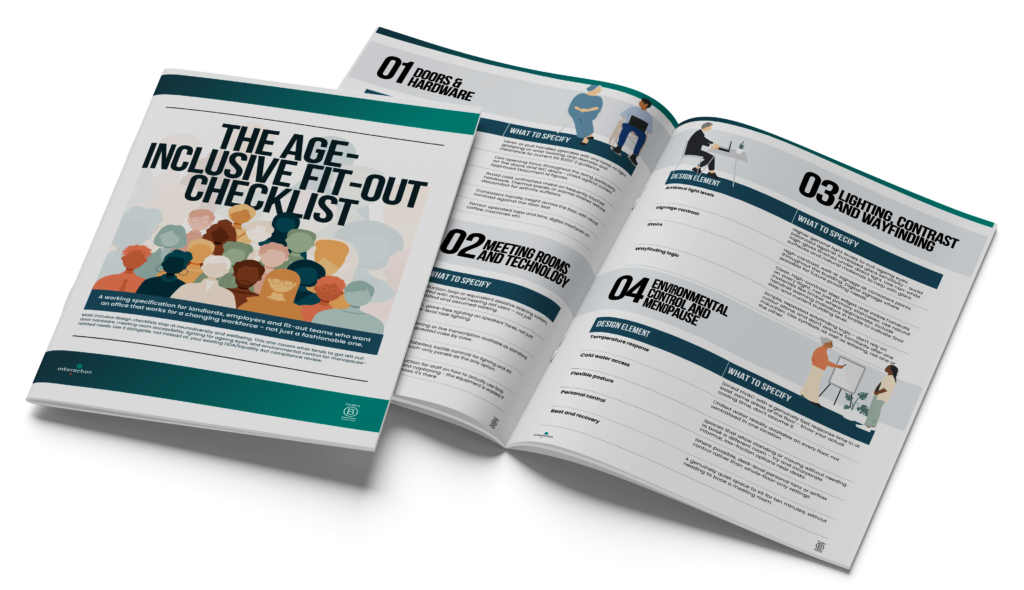
Introducing, Interaction’s Age-Inclusive Fit-Out Checklist, a free, practical resource for landlords, employers, designers and fit-out teams who want to make inclusion part of the design brief from the start.
Rather than another broad overview of accessible design, the checklist focuses on the everyday details that can be overlooked, with specific considerations across five key areas of the workplace. It brings together practical specification guidance to help project teams ask better questions, challenge assumptions and make more informed design decisions.
Whether you’re planning a new office, refurbishing an existing workspace or reviewing a design proposal, it’s a useful resource to have alongside your existing accessibility compliance review.
Meeting regulations is essential, but designing a workplace that genuinely works for people requires us to think beyond them.
Is your next fit-out missing something important?
Download our official age-inclusive design checklist today.