Skip to content
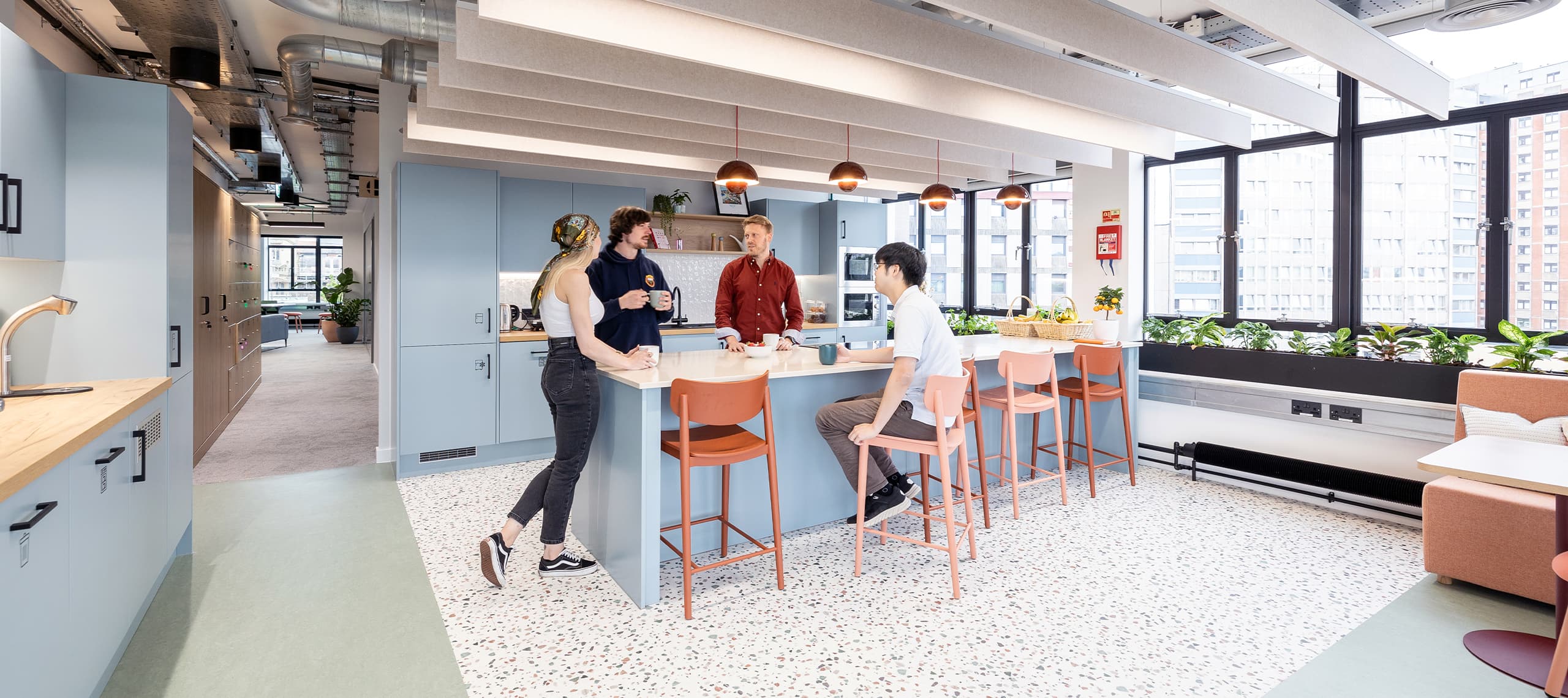
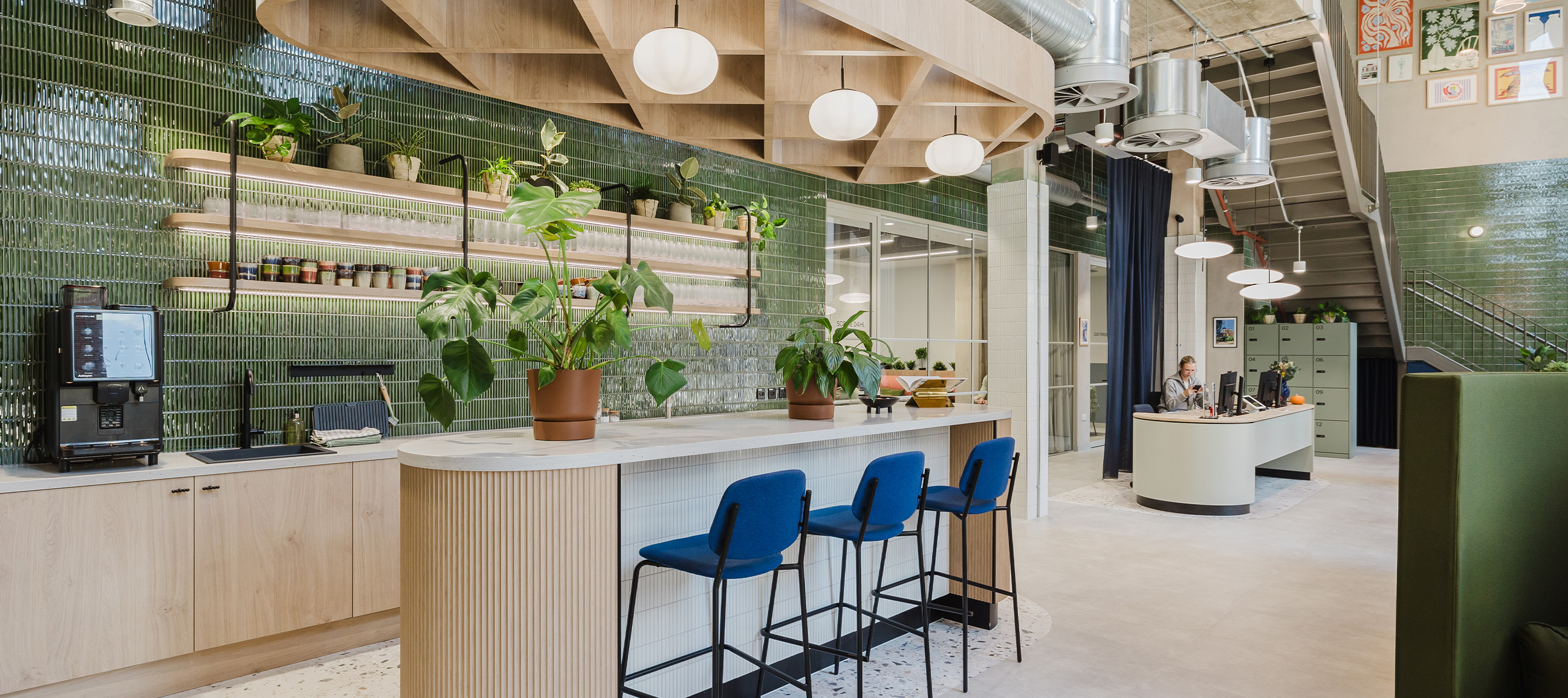
A coworking office welcome and kitchen space with green tiled walls and blue bar stools

Sustainable office retrofit and refurbishment

A new start doesn’t always need a blank slate

Interaction helps landlords and occupiers improve existing offices through sustainable retrofit, refurbishment and circular fit-out. We look at what can be retained, reused and upgraded, then design and deliver spaces that reduce waste, support ESG goals and work harder for the people using them.

Making sustainability simple

Our Sustainable Office Retrofit Process

  1. Survey what exists
    We assess the current space, furniture, finishes and services to understand what can be retained, reused or upgraded.
  2. Define the commercial and sustainability goals
    For landlords, that might mean lease-up, ERV, tenant appeal and ESG. For occupiers, it might mean culture, productivity, wellbeing and hybrid working.
  3. Build reuse into the design
    We design around what is worth keeping, so sustainability is part of the brief rather than an afterthought.
  4. Specify carefully
    Where new materials are needed, we look at durability, responsible sourcing, lifecycle value and future adaptability.
  5. Deliver with control
    We call it “Perfection at Pace”: you need sustainable outcomes without programme drift or delivery risk.
  6. Record the impact
    Where possible, track what has been retained, reused, recycled or diverted from waste.
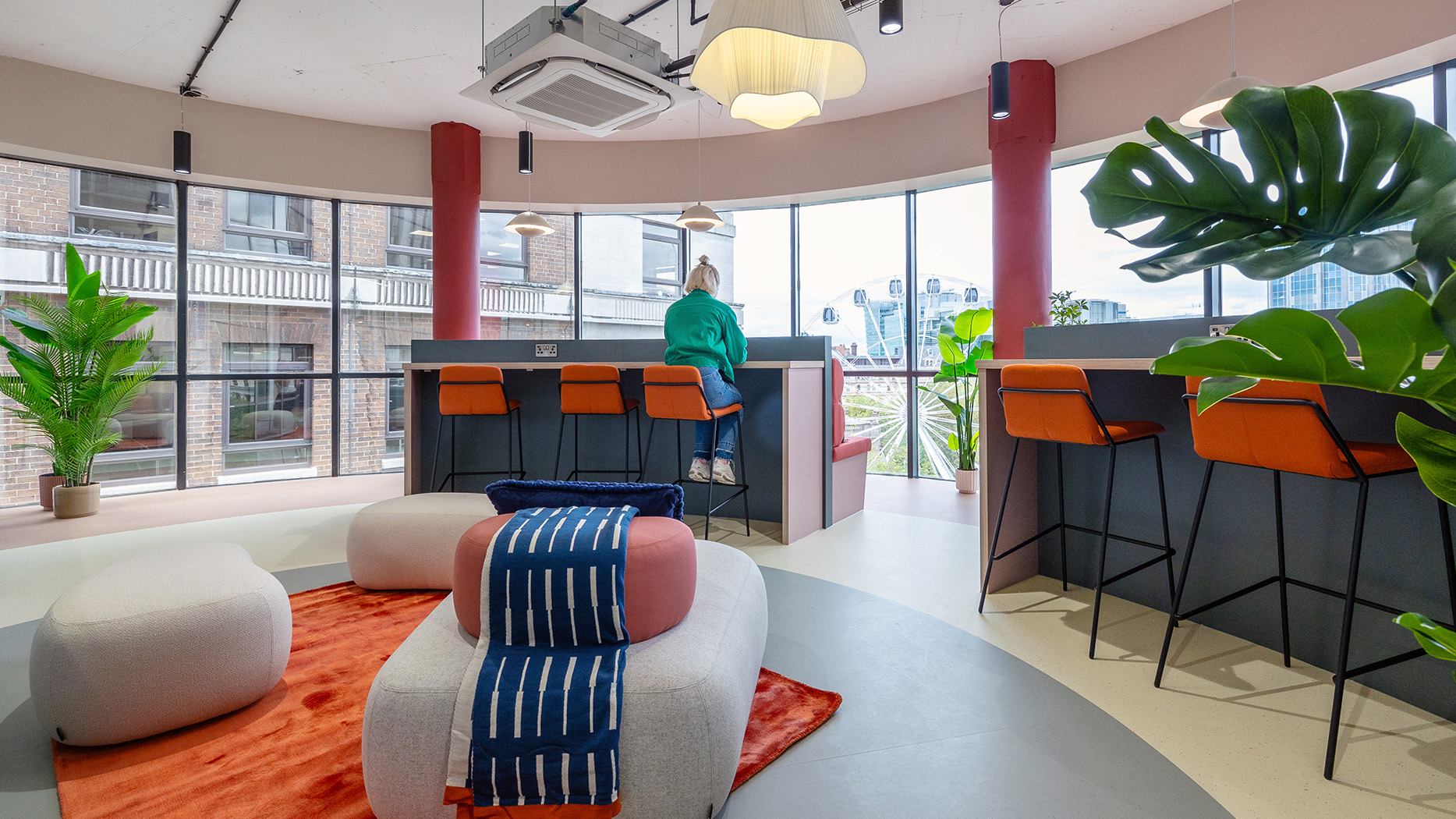
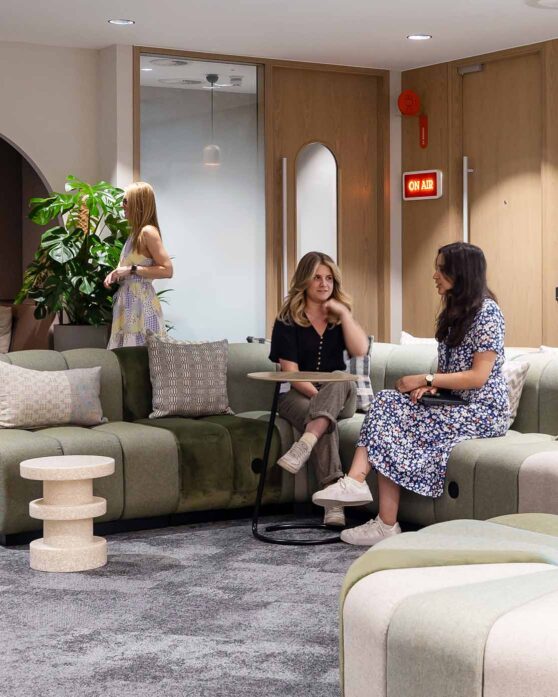
A coworking lounge with colourful seating, orange bar stools and large curved windows

Reuse, repair, refinish

What is a circular office fit-out?

A circular office fit-out is designed to keep materials, products and furniture in use for longer. The aim is to reduce waste and avoid unnecessary new procurement without compromising quality.

Before anything is replaced, we ask:

  • Can it stay where it is?
  • Can it be cleaned, repaired or refinished?
  • Can it be reused elsewhere in the workplace?
  • Can it be donated, resold or returned through a take-back scheme?
  • Does replacing it genuinely improve performance, safety or experience?

We like to make circularity practical rather than theoretical.

B

What can be reused in an office refurbishment?

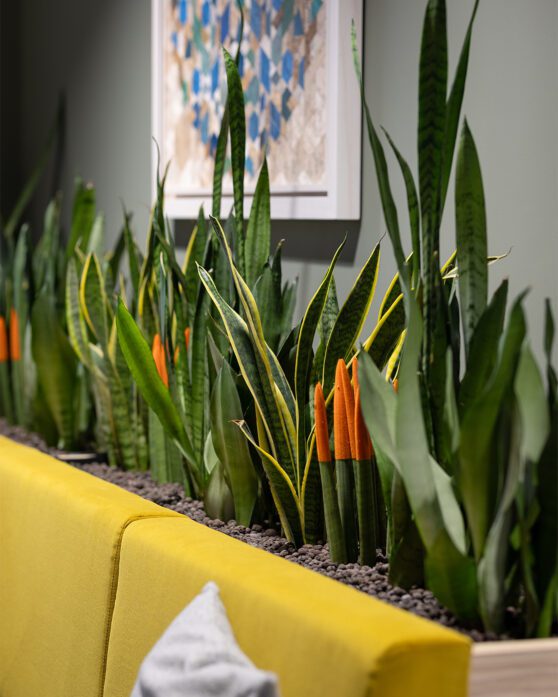
modern office breakout space with striped green banquette seating, colourful cushions and indoor planting

The most sustainable material is often the one already in the building. Retrofit is about making better use of what already exists. Before we specify anything new, we look carefully at what can be retained, reused or reimagined. Done well, that approach doesn’t limit ambition. It reduces waste, protects value and creates workplaces that feel considered, current and commercially useful

Mike BorneHead of Operations, Interaction

Office Retrofit FAQs

What is sustainable office retrofit?

Sustainable office retrofit is the process of improving an existing workplace while reducing unnecessary waste, embodied carbon and resource use.

Instead of stripping everything out and starting again, a retrofit looks at what can be retained, reused, repaired or upgraded. This might include furniture, partitions, lighting, flooring, finishes, technology, acoustics and shared amenities.

For landlords, sustainable retrofit can help make older office space more attractive to modern tenants. For occupiers, it can create a better workplace without the cost, carbon and disruption of a full relocation.

What is the difference between retrofit and refurbishment?

Office refurbishment usually means improving or updating an existing workplace. That might include new finishes, furniture, meeting rooms, collaboration areas, technology or wellbeing features.

Retrofit goes a step further. It focuses on improving the performance of the existing space or building – often with sustainability, energy use, carbon reduction and long-term adaptability in mind.

In practice, the two often overlap. A sustainable office refurbishment may include retrofit measures, while a retrofit project may also refresh the look, feel and usability of the workplace.

Is office refurbishment more sustainable than relocation?

It can be, especially when the existing location still works and the project team can retain or reuse a meaningful amount of what is already there.

Relocation often involves new materials, new furniture, transport, strip-out waste and the embodied carbon of fitting out another space. Refurbishment can reduce that impact by improving the workplace you already have.

That said, refurbishment is not automatically the lower-carbon choice. The best answer depends on the condition of the space, the building’s performance, lease terms, operational needs and how much can realistically be retained. A good early-stage review will help compare the options properly.

What is a circular office fit-out?

A circular office fit-out is designed to keep products, materials and furniture in use for as long as possible.

Rather than defaulting to new, the project starts by asking what can be retained, reused, repaired, repurposed, resold, donated or recycled. This can apply to desks, chairs, storage, partitions, glazing, flooring, lighting, joinery and finishes.

The aim is to reduce waste and embodied carbon without compromising the quality or performance of the workplace. Done well, circular fit-out feels considered and intentional – not second-hand.

Can office furniture be reused during a refurbishment?

Yes. Office furniture can often be reused during a refurbishment, provided it is in good condition, fit for purpose and suitable for the new design.

Desks, task chairs, meeting tables, storage, soft seating and acoustic products can sometimes be retained, repaired, reupholstered, refinished or relocated within the new layout.

Where furniture is no longer needed, it may be possible to donate, resell, recycle or return items through supplier take-back schemes. The key is to assess furniture early, before design decisions and procurement choices are locked in.

How can landlords improve ESG performance through office retrofit?

Landlords can use office retrofit to improve ESG performance by upgrading existing assets in a more targeted, lower-waste way.

That might include improving energy efficiency, retaining and reusing materials, choosing lower-impact finishes, enhancing amenities, improving wellbeing features and creating more flexible, tenant-ready space.

For asset managers, the commercial benefit is just as important. A better-performing workplace can support tenant appeal, reduce voids, improve leasing conversations and help older space compete with newer stock. The strongest retrofit strategies connect ESG improvements to asset value, tenant experience and long-term resilience.

Can CAT A+ fit-out be sustainable?

Yes. CAT A+ fit-out can be sustainable when it is designed with longevity, flexibility and responsible specification in mind.

A sustainable CAT A+ scheme should avoid over-specification and focus on what future tenants are most likely to value: adaptable layouts, durable finishes, efficient lighting, good acoustics, quality furniture, smart services and a strong sense of arrival.

For landlords, the aim is to create space that is ready to occupy, attractive to tenants and less likely to be stripped out again quickly. That means sustainability is not just about material choices – it is about designing a fit-out with a longer useful life.

How do you reduce waste during an office fit-out?

Waste reduction starts before site work begins.

The first step is to survey the existing space and identify what can be retained, reused, repaired or repurposed. The design can then work around those decisions, rather than treating reuse as an afterthought.

Waste can also be reduced through careful procurement, accurate ordering, modular or adaptable products, supplier take-back schemes, responsible strip-out, donation routes and clear site waste management.

The biggest gains usually come from making decisions early. Once a design has been fixed and materials ordered, it becomes much harder to avoid waste.

What sustainability standards apply to office fit-out?

Several sustainability standards and frameworks can apply to office fit-out, depending on the project, building and client goals.

Common examples include SKA, BREEAM, WELL, Fitwel and LEED. Some projects may also consider NABERS, EPC performance, operational energy, embodied carbon reporting, waste targets and responsible sourcing requirements.

Not every project needs formal certification. In many cases, the right approach is to use these frameworks to guide better decisions – reducing waste, improving wellbeing, choosing responsible materials and creating a workplace that performs well over time.

How early should sustainability be considered in an office refurbishment?

Sustainability should be considered from the very start of an office refurbishment – before the brief, budget and design are fixed.

Early decisions have the biggest impact. This is when you can assess what already exists, decide what can be retained, set carbon and waste priorities, compare refurbishment with relocation, and choose the right level of certification or reporting.

If sustainability is added late, it usually becomes harder, more expensive and less effective. Build it into the brief from day one and it becomes a practical part of the project.