How workspace design is evolving in 2026
If you’ve read one “office trends” article, you’ve probably read them all. Hybrid working. Flexible desks. Plants. Yawn.
Now, in 2026, none of that is new. The real shift is more interesting: offices are no longer being designed around attendance, but around human performance. Businesses have moved on from asking “how do we get people back?” and are now asking “what should the office actually do for them?”
This next wave of workplace design is about adaptability, atmosphere and experience – and it’s already shaping how the best workplaces are being built. Here’s what our designers are expecting to see more of in 2026:
1. The office becomes a mini campus, not a single-use space
One of the biggest shifts we’re seeing is offices designed as mini campuses rather than mono-function workplaces.
Instead of asking people to choose between “home” or “office”, 2026 offices are giving them everything they need in one place:
- Focused work areas alongside more domestic, home-like settings
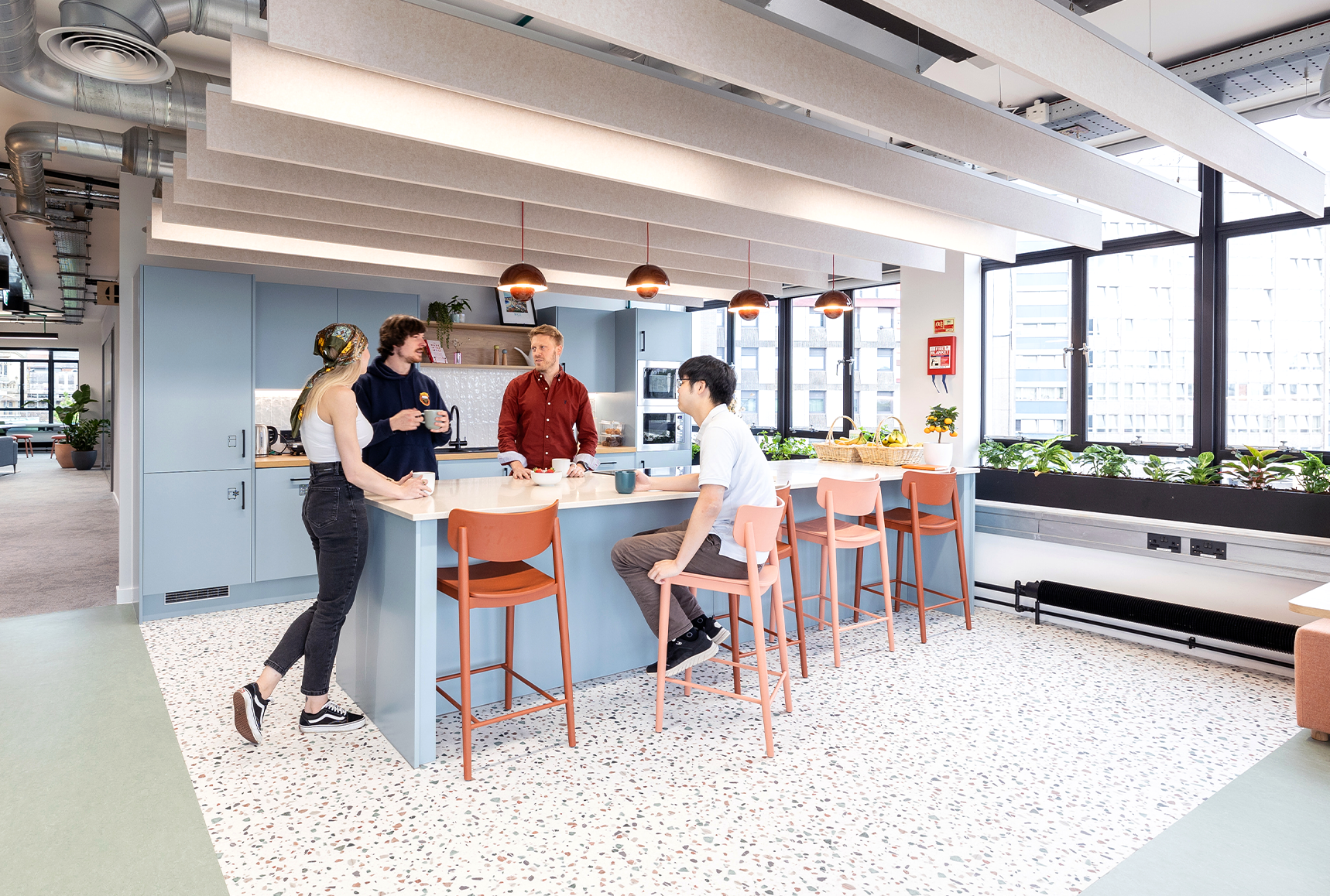
- Hospitality-led social spaces – coffee bars, lounges and kitchens that act as social anchors, not just break points. For example, TLT’s Manchester office includes a (free!) coffee bar with full time barista, challenging the traditional expectations of a legal office
- Quiet, retreat-style zones for concentration or decompression, again taking inspiration from hotel social spaces, such as Amdaris’ sunken conversation pit-style social lounge
- Wellness spaces that support rest, movement and recovery
- Supporting amenities such as showers, gyms and rest or sleep pods
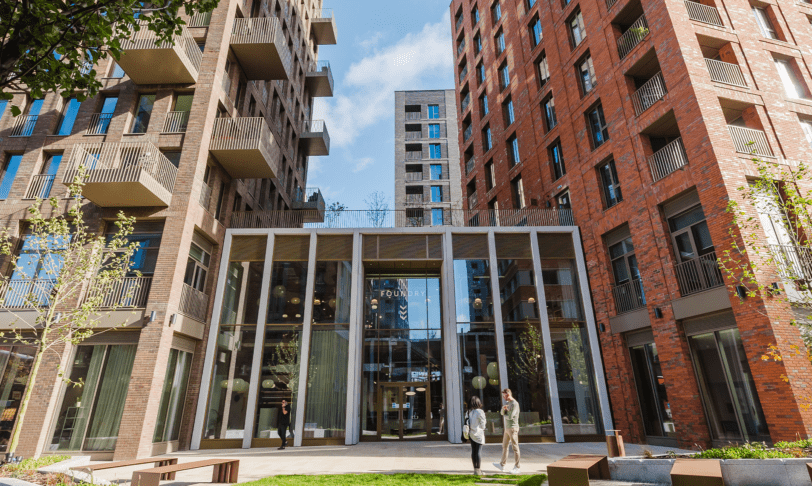
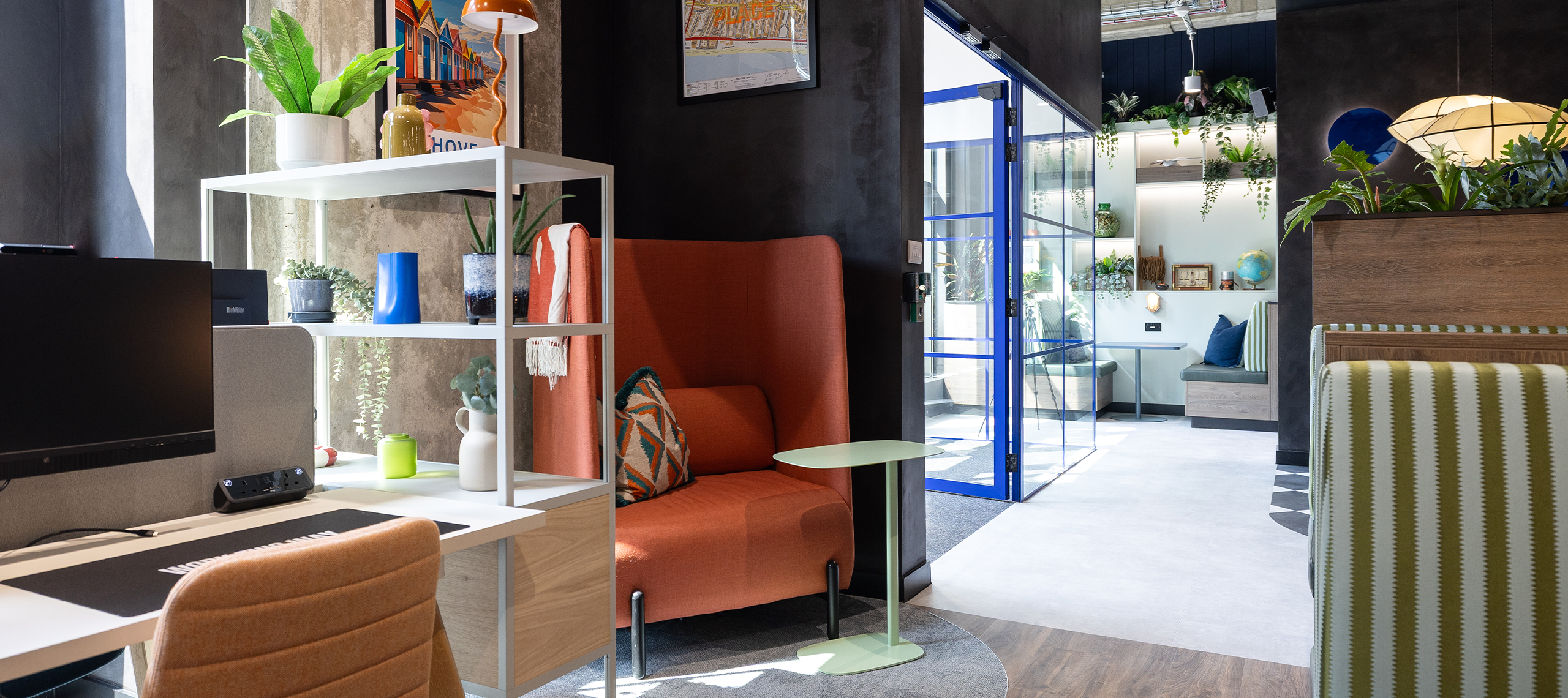
This kind of thinking is already playing out in more progressive coworking and workplace models. FOUNDRY is a strong example of where campus-style design is heading.
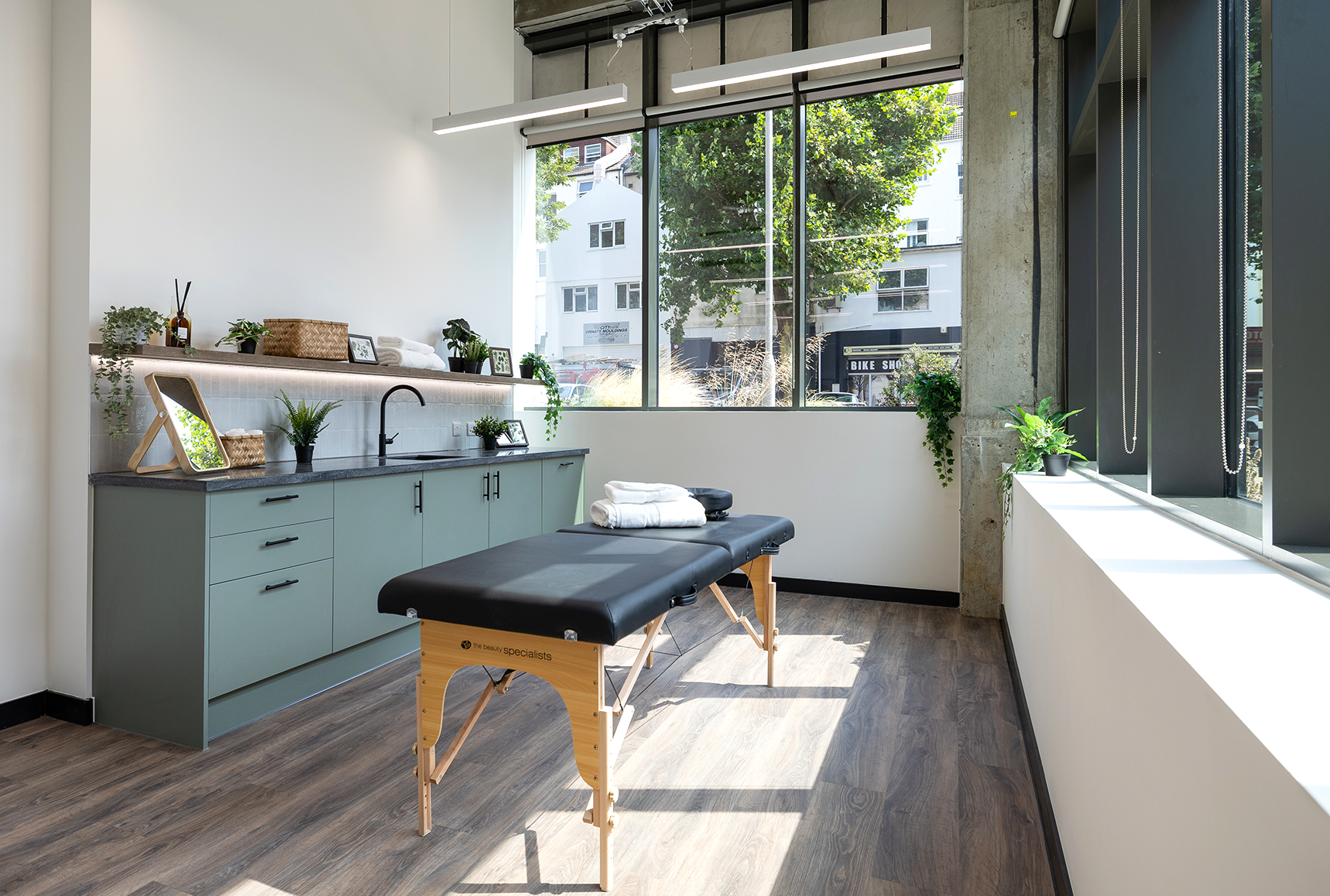
Their Hove site occupies space within Hove Gardens, a mixed-use build-to-rent development by Legal & General. Rather than operating as a sealed-off coworking offer, the workspace sits alongside Hove Garden Studios – a collection of private suites for local wellness and lifestyle businesses, including a physiotherapist, beautician and dog groomers.
This pilot model deliberately brings independent operators directly into the workspace ecosystem. Members, residents and local businesses overlap naturally, positioning the workspace as a genuine community asset embedded in its neighbourhood.
FOUNDRY’s newest site will take this even further by introducing sleep pods, giving members space to properly rest. For people travelling into London for early meetings, or moving between intense work modes, this acknowledges something offices have traditionally ignored – fatigue is part of modern working life, and design can respond to it. What this model shows is a broader shift: workspaces are starting to behave more like local infrastructure than standalone offices.
2. Adaptability becomes a design principle, not a bolt-on
Flexibility in 2026 is more sophisticated than “modular furniture”. The focus is on adaptability at multiple scales:
- Spaces that can change purpose across a day or week
- Zones that support solo focus, teamwork and recovery without feeling temporary
- Layouts that can evolve as teams grow, shrink or reorganise
This approach also responds to a growing demand for quiet. A report by the International Workplace Group found that 85% of employees believe access to quiet zones significantly improves productivity. Silence, privacy and retreat really are essential infrastructure in the modern workspace. The conversation has shifted from “collaboration everywhere” to choice and balance – and that’s shaping floorplates in a very different way.
If you’re a legal firm wondering how adaptability might impact your workspace design, why not check out our Office Design Guide for Law Firms.
3. Experiential spaces replace ‘amenities for show’
In 2026, offices are less interested in impressing visitors and more interested in how spaces feel to use In 2026, offices are less interested in impressing visitors and more interested in how spaces feel to use every day.
Experiential design is about:
- Spaces that encourage spontaneous connection rather than forced interaction
- Environments that support rituals – team moments, informal check-ins, shared breaks
- Layouts that foster a sense of belonging and community
These spaces often borrow cues from hospitality and culture rather than corporate offices – but with a clearer purpose, allowing the spaces to look great whilst also making connection easy and enhancing productivity.
As Laura Stephens, Senior Designer at Interaction, puts it, the focus is on amenities that “enhance your workday, not just where you sit”, creating spaces that feel full of personality and genuinely worth travelling to.
That focus on experience is also shaping what sits beyond the office itself. We’re increasingly seeing shared spaces within buildings play a more active role in the working day. Instead of a front lobby designed purely for arrival, many buildings now offer gyms, wellbeing spaces, cafés and informal work lounges that people actually use.
While this shift is often driven by landlords repositioning buildings, the real impact is felt by occupiers. These shared amenities become a natural extension of the workplace – places for informal meetings, focused solo work, decompression or social connection. The result is less pressure on the office floorplate and a noticeably better day-to-day experience for employees.
4. Colour and lighting get braver – and more intentional
Post-pandemic offices leaned heavily into safe, neutral palettes. In 2026, colour is coming back – but with far more intention.
We’re seeing two parallel approaches used deliberately across different zones:
- Soft whites and calming neutrals (think Pantone’s colour of the year, Cloud Dancer) to create visual quiet and reduce cognitive load
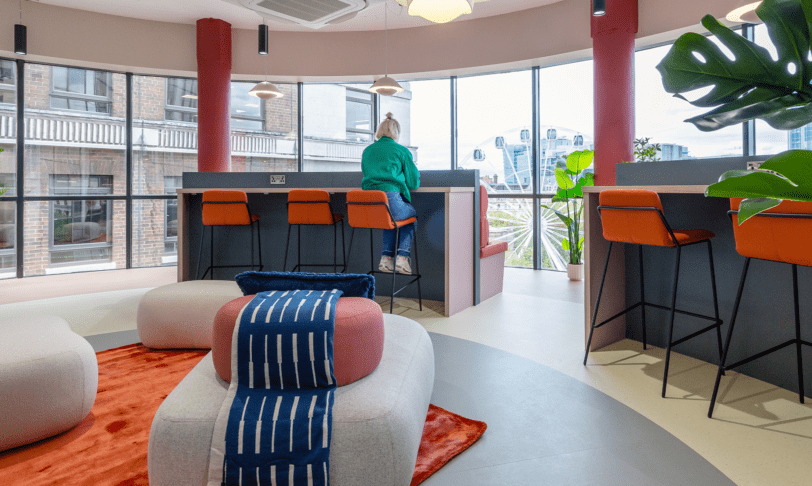
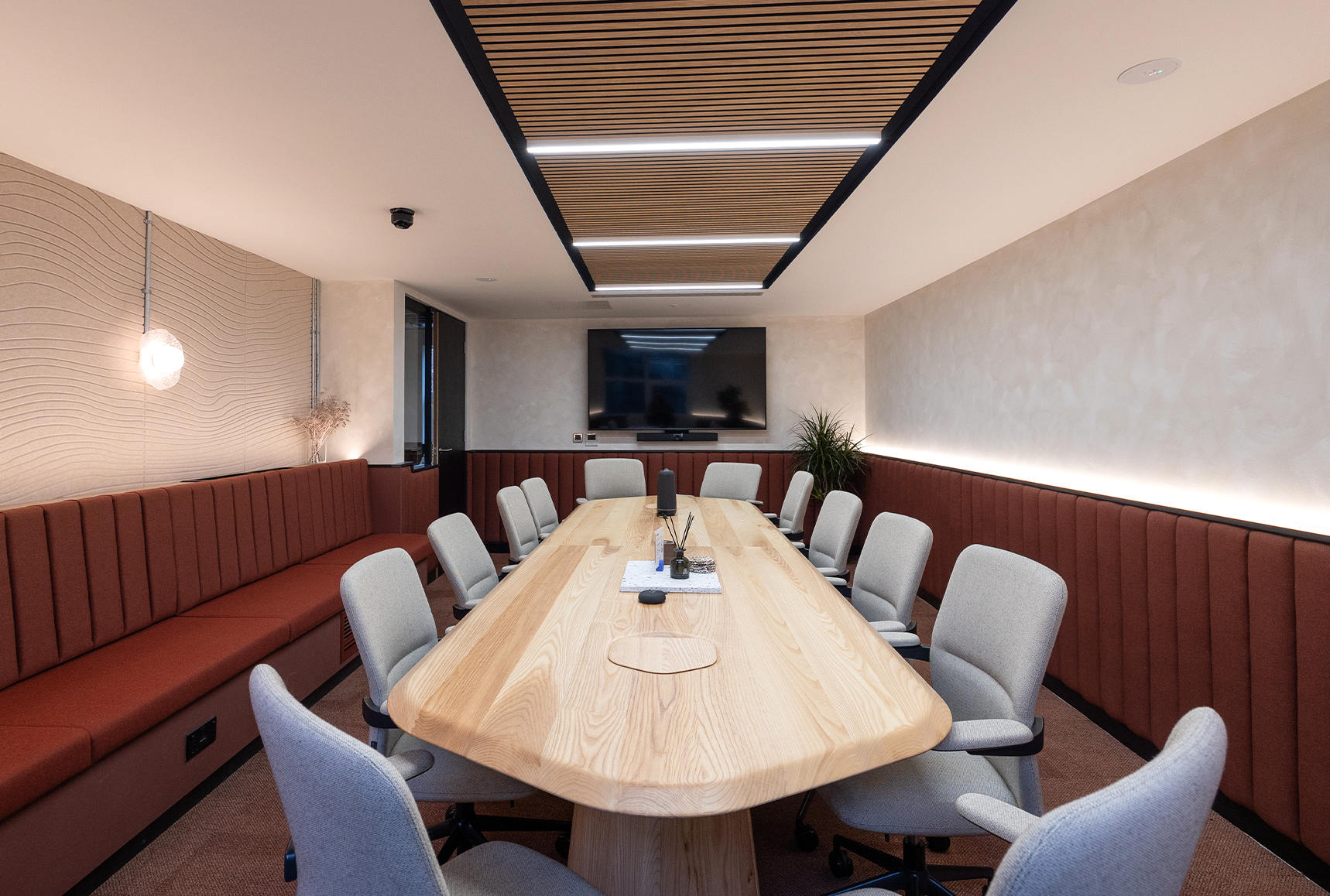
- Deeper, more saturated colours such as oxblood red, terracotta and deep blues to energise and focus
According to colour psychology, oxblood evokes confidence, strength and creativity, making it well suited to spaces designed for bold thinking or leadership moments. Research from the University of Texas also suggests colour can directly impact workplace performance, with warmer hues boosting energy and focus, while softer tones encourage relaxation. Mirna Aodesh, Mid-Weight Designer at Interaction describes that“we’ll see a lot more confidence around colour, with richer tones like burgundy, yellows, blues and pinks coming through.”
Colour is increasingly paired with atmospheric lighting – layered, indirect and ambient – to create immersive zones rather than flat, uniformly lit floors. As Georgia Salter-Randall, Mid-Weight Designer at Interaction, puts it:
“At the moment, we’re really focussing on using lighting to enhance aesthetics and wellbeing, as well as the practical use. A mix of natural light, focused task lighting and warm, low-level ambient light can completely change how a workspace looks and feels.”
Careful – and where appropriate, bold – use of colour and lighting can subtly shape mood, behaviour and productivity. Small details, with a big impact.
5. Wellness-centric design becomes measurable – and provocative
Wellness design in 2026 has gone beyond token gestures and instead needs to be built into how offices function and perform – supporting human energy, recovery and connection, and measured by outcomes rather than intentions.
According to a 2024 report by the Global Wellness Institute, organisations implementing wellness-centric design see a 32% decrease in absenteeism and 23% increase in job satisfaction, with other research suggesting every $1 invested in workplace wellness can save around $2.70 in reduced absence-related costs.
But the most progressive workplaces are going further than desks, daylight and plants – exploring design moves that actively influence how people feel and behave.
Nervous-system-first design
- Circadian lighting schemes that intentionally sharpen focus in the morning and wind people down late afternoon
- Longer sightlines, curved circulation, lower ceiling transitions after intense zones that naturally slow breathing and reduce stress
Normalising rest and emotional honesty
- Mood-responsive breakout spaces designed for different emotional states
- Rest and lie-down spaces that feel domestic and socially acceptable, not hidden or awkward
- Acoustic zoning and private-but-not-isolated refuge spaces for mental health or difficult conversations
Movement without performance
- Circulation that gently encourages movement – long looping routes, gradients, places to perch
- Posture-varied environments rather than one “active working” solution
Social wellbeing
- Non-performative social spaces with smaller tables, softer acoustics, domestic scale
- Shared rituals designed into the space – for instance, at Ghyston, a team culture of cooking together led to a communal herb garden built directly into the breakout area
Psychological safety and inclusion
- Choice over prescription: wellness spaces that offer options, not instructions
- Acoustic zoning and private-but-not-isolated refuge spaces for mental health or difficult conversations
The big shift to watch: progressive wellness design helps remove stigma. The most forward-thinking businesses aren’t asking people to show up as a “better version” of themselves – they’re designing spaces that say: it’s all welcome here.
What this means for businesses in 2026
The common thread running through all of these trends is a simple one: better offices start with a better understanding of people.
In 2026, successful workplaces aren’t defined by how often they’re used, but by how they make people feel when they are. Supported. Focused. Comfortable enough to be themselves, and connected enough to do their best work.
For tech, law, professional services, and other knowledge-led organisations, the office in 2026 needs to do three things well:
- Support different modes of work across a full day
- Create experiences people can’t get at home
- Actively improve wellbeing, focus and connection
Design can’t solve every workplace challenge. But when it’s thoughtful, adaptable and human-led, it can quietly remove friction, reduce stress and make work feel a little easier. And that, increasingly, is what great offices are there to do.