Beyond the cleanroom: what makes supporting spaces matter in highly regulated environments
When you walk into a high‑tech manufacturing or life sciences facility you usually see the cleanrooms, the labs, the “mission critical” zones. We tend to assume that is where the action happens. But step back a little, and you’ll find other spaces – offices next to the manufacturing floor, meeting rooms near the lab, breakout spaces and changing areas around the production envelope – which quietly make or break how well everything functions.
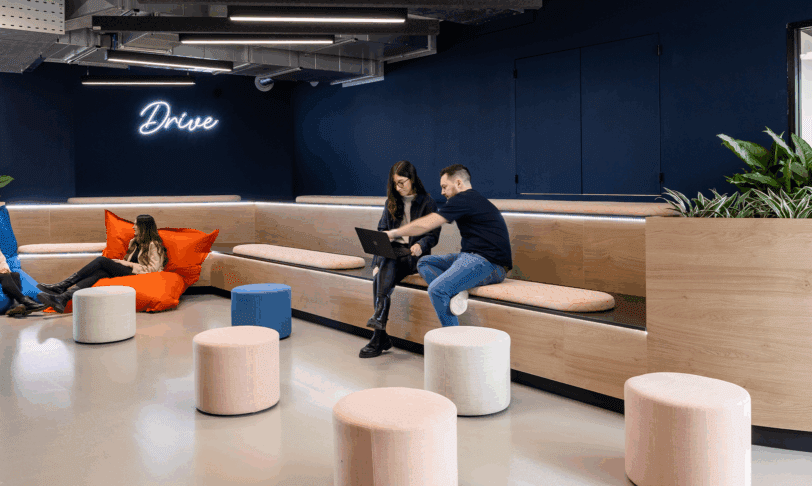
The regulated zones governed by Good Manufacturing Practice (GMP) are built to the highest specifications with strict flow controls, airlocks, validated surfaces, and so on. But the areas adjacent to that core often get less design investment and yet they’re where people spend much of their day, where collaboration, insight and downtime happen. These spaces are critical to life sciences, advanced engineering, and high-precision manufacturing environments. While they don’t require the same GMP classification as cleanrooms or production areas, their design has a direct impact on compliance, operational efficiency, and team wellbeing.
Here are some trends and observations worth noting:
- The life sciences sector profiles show that workforce, workflow and space types are converging in new ways. For example, firms are no longer just building labs and offices separately – research, manufacturing and admin spaces are increasingly colocated or intermingled.
- From a facility design perspective, studies of GMP or aseptic‑manufacturing buildings highlight that supporting technical areas (eg., utilities, labs, admin) are often placed adjacent to the GMP core for operational efficiency.
- There’s rising recognition that design in the “non‑clean” zones matters for inclusion, retention and human performance: one analysis of life‑science buildings shows “inclusive design” principles (acoustics, quiet space, wayfinding) are starting to get applied in labs and manufacturing‑adjacent spaces.
For facilities managers in life sciences, aerospace, or other highly regulated sectors, these adjacent zones play a strategic role in maintaining compliance and efficiency.
What good design for adjacent spaces actually looks like
Rather than broad principles, let’s zoom in on what happens on the ground. More than just looking good, support spaces need to function in a way that aligns with the regulated core. Some practical design features:
Transparency with control: Glazing and visual links between GMP and adjacent areas allow staff or visitors to see operations without compromising strict access or contamination control. These “human buffers” complement the physical buffers of airlocks and gown rooms, enabling safe, smooth transitions.
Logical adjacencies and flow: Offices, QC labs, and utilities positioned next to GMP zones allow efficient movement of people, materials, and supervision. Modular furniture in collaboration zones, for example, lets teams reconfigure spaces for projects without disrupting workflow or compromising GMP integrity.
Materials and finishes: Surfaces must be durable, easy to clean, and hygienic – but also welcoming, so staff feel comfortable and engaged.
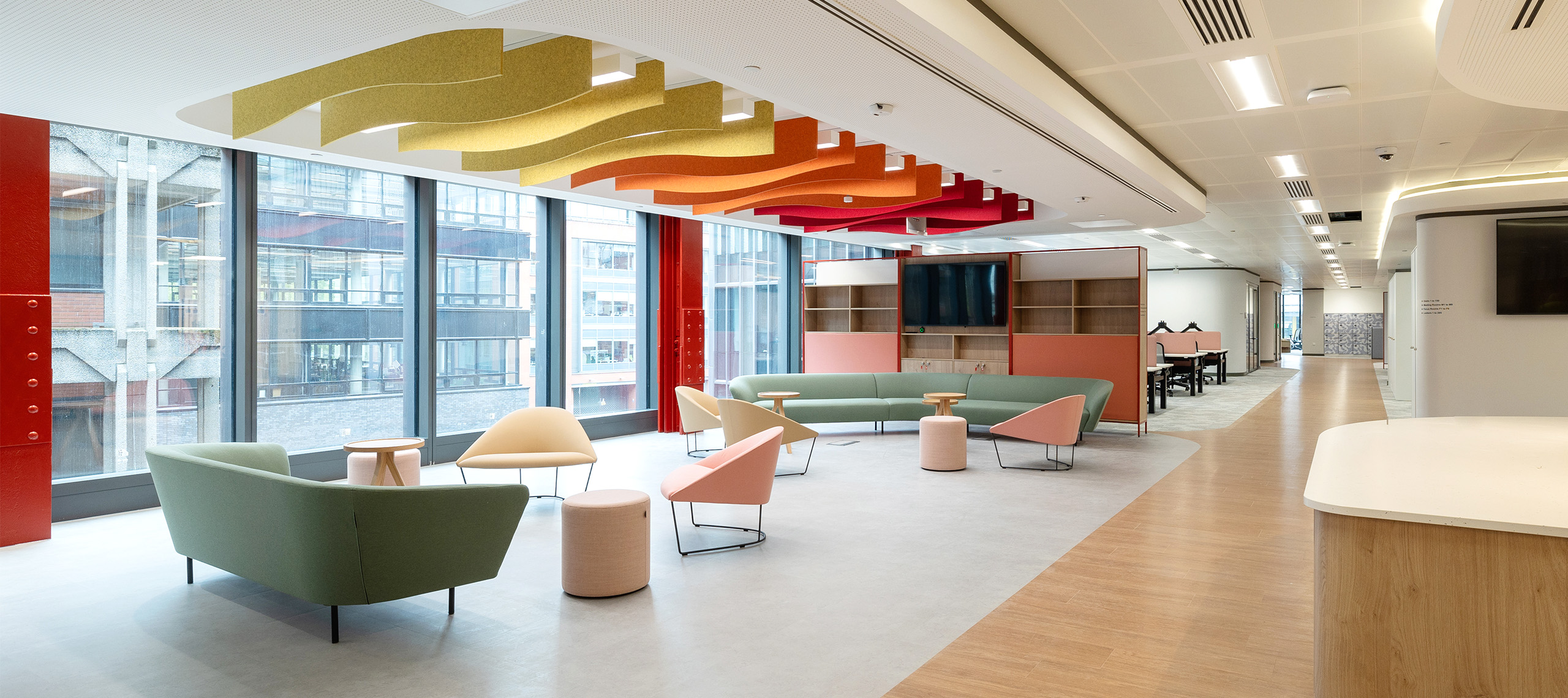
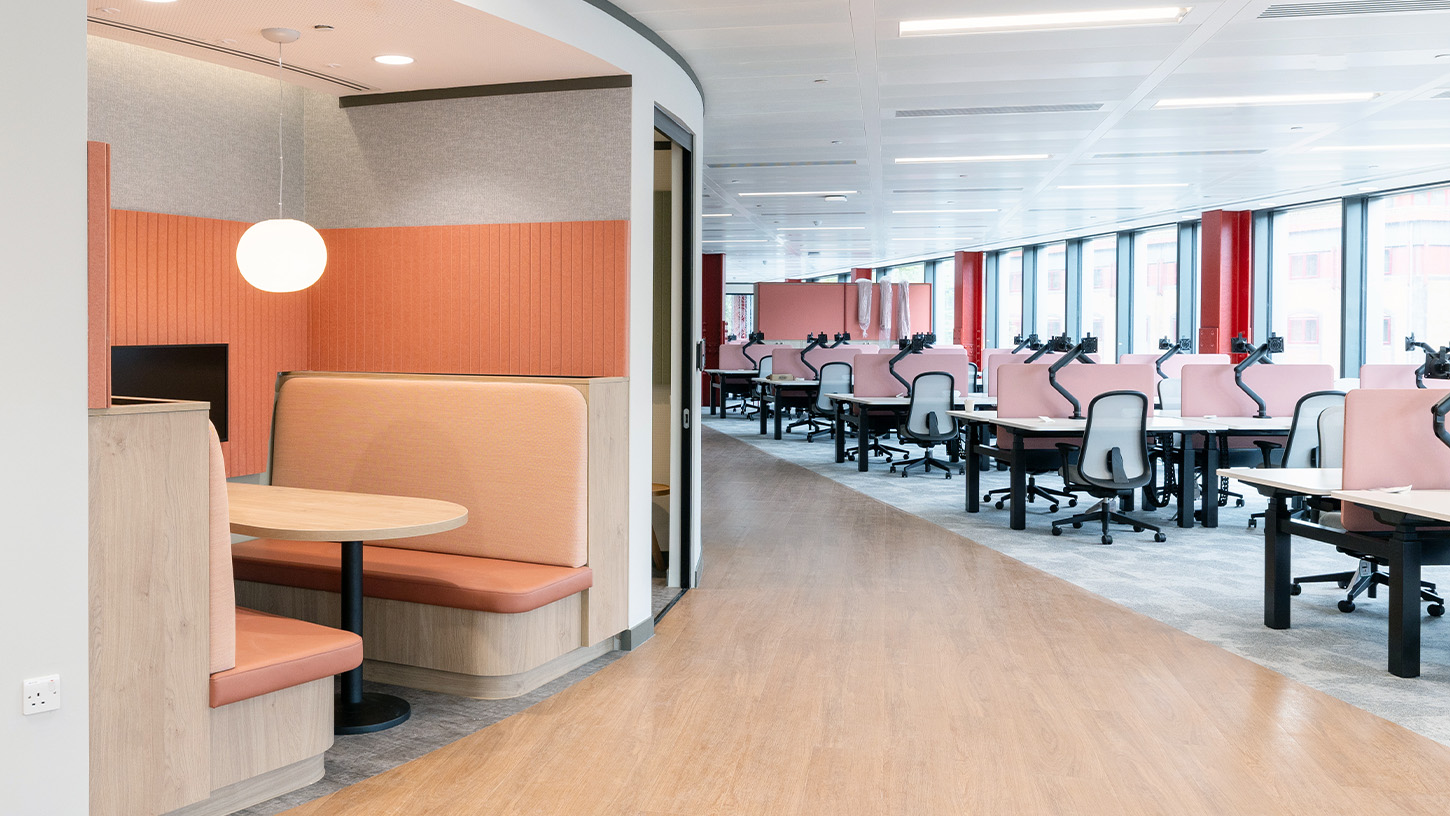
Human factors: Acoustics, daylight, colours, circulation, and flexible work areas all impact staff experience, productivity, and wellbeing. Acoustic panels in adjacent labs, for example, reduce noise transfer so deep-focus analysis isn’t interrupted by nearby collaboration. While GMP-regulated zones often need to be ultra-hygienic, stark, and minimal, adjacent spaces can be inviting and engaging – from thoughtful colour palettes to soft furnishings.
Environmental control: Temperature, humidity, air pressure, and contamination risks are all considered even in non-classified spaces. HVAC systems, airlocks, and gowning areas integrate with the facility hierarchy to maintain performance.
Flexibility and adaptability: Many adjacent spaces serve multiple purposes – hosting meetings, informal collaboration, or temporary storage. Modular layouts and adaptable fit-outs are key.
Case study: GKN Aerospace
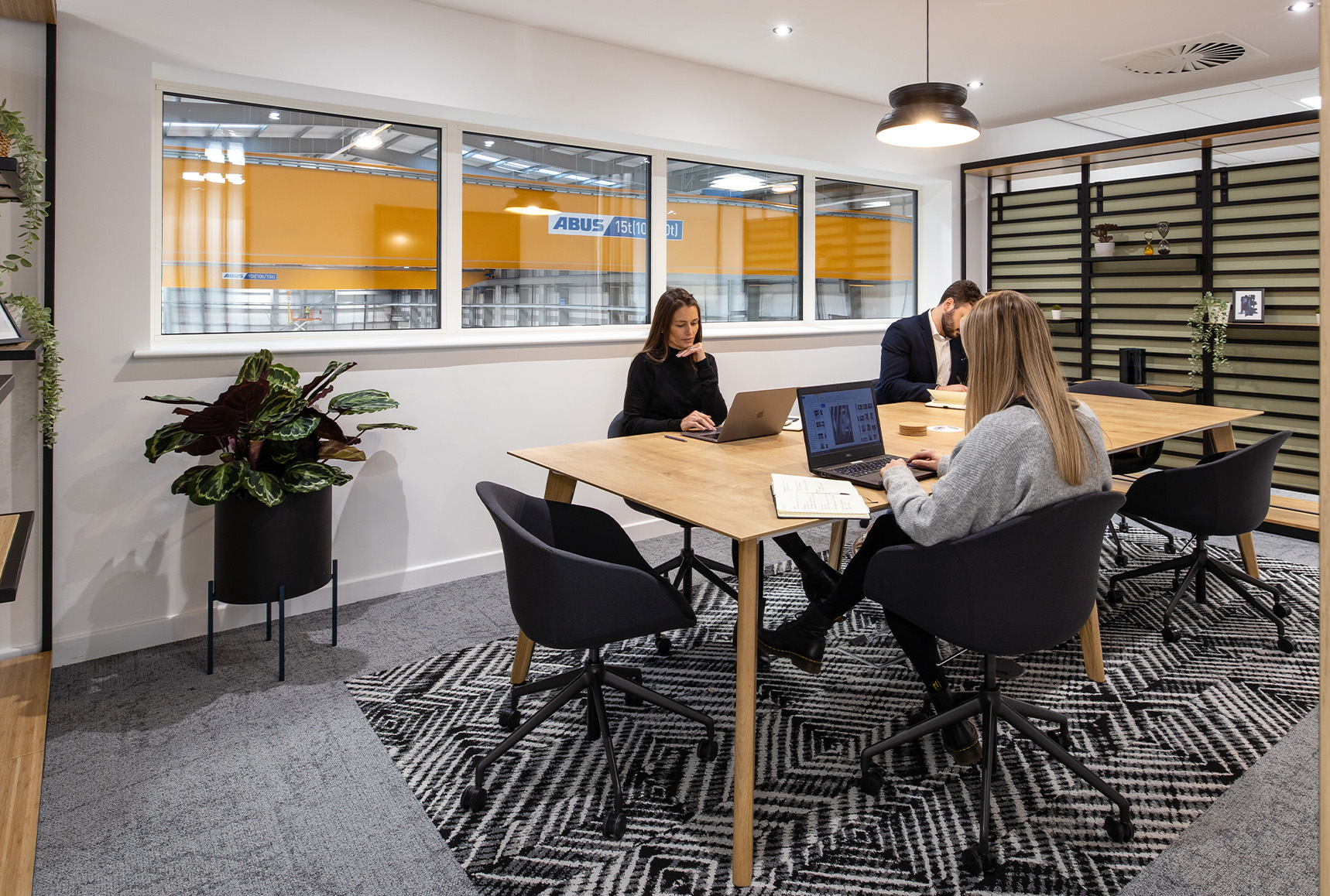
At GKN Aerospace’s Global Technology Centre, we designed the top-floor List X-compliant environment to meet stringent government security requirements, including a Faraday cage for complete electromagnetic shielding. Across the wider building, layered security was a key consideration – from full access control and ANPR-connected entry barriers, to CCTV coverage and intruder detection systems – ensuring the facility could operate safely and reliably.
But technical excellence didn’t stop at compliance. The adjacent offices, collaboration areas, and breakout spaces were designed to interface seamlessly with these high-spec zones, balancing operational precision with usability. Sightlines, circulation, and environmental controls were carefully considered so staff could move efficiently between secure, high-performance areas and supporting zones, while finishes, daylight, and acoustic treatments created spaces that supported focus, wellbeing, and collaboration. In this way, the “adjacent” areas weren’t secondary – they were integral to keeping the facility running smoothly and enabling high-value operations.
Why this matters for you and your facility
If you’re overseeing a facility in life sciences, aerospace, defence or manufacturing with regulated zones, thinking of the adjacent spaces as simply ‘office’ or ‘break room’ is a mistake. These are the spaces that enable the core to function well. Some specific business‑outcomes to consider:
A facility culture and environment that signal your company’s capability – useful when you’re pitching to clients, partners or talent.
Faster issue resolution and collaboration when teams are physically and visually connected to production/lab zones.
Reduced operational friction, less downtime when transitions between zones are seamless.
Better staff experience which supports retention in high‑skill areas (particularly important where talent shortages are acute). Learn more about how good workspace design can impact talent retention in life sciences and engineering offices here.
Read the full GKN Aerospace case study here
Final thoughts
Even if a space isn’t GMP-classified, its design shapes the performance of everything around it. Transition spaces act as connectors: each layer supports the next. Thoughtful design ensures these environments perform reliably, protect high-value operations, and keep staff safe, engaged, and productive.
Supporting spaces should be more than an afterthought. In regulated manufacturing, labs, GMP zones, or complex engineering, adjacent areas are integral to the system. Designing them well means designing a facility that works – from people, to process, to compliance. It’s less about ‘nice furniture in an office’ and more about creating the right place, with the right layout and environment, for the people operating at the edge of innovation.