Beyond Pretty: space that sells itself (at a premium)
For the first time since 2020, UK office vacancy has ticked down, from 8.7 to 8.6 per cent, as blue-chip occupiers flood back to quality space. Yet that headline masks a new truth: tenants now set the agenda. They’re cherry-picking green, tech-ready Grade A buildings… and ignoring everything else. Landlords holding yesterday’s spec are discovering capital expenditure is cheaper than chronic voids.
Prime examples are playing out in Central London, where vacancy in Q3 2024 slid to 6.9 per cent while “secondary” space languished, proving that flight-to-quality is more than a soundbite.
Translation: If your asset doesn’t offer turnkey, flexible and ESG-aligned space, prepare to discount or sit empty.
What tenants actually want in 2025
Hybrid-ready layouts
Average office attendance has stabilised at 3.1 days/week, meaning space has to flex between focus and collaboration.
Collaboration areas and amenity-rich common spaces
From yoga studios and active travel facilities, to office bars and rooftop terraces, tenants are expecting more than just desk space: any lease decisions hinge on experiential amenities say NAIOP.
Low-carbon materials and high wellness ratings
ESG commitments are front and centre of many tenant’s leasing decisions. In fact, a global survey by JLL found that 74% of occupiers said they were willing to pay a premium for environmentally sustainable spaces, whilst BREEAM-certified offices command up to 9.5 % rent premiums.
Learn more about sustainable real estate solutions here.
Short lead times
Post-pandemic occupiers sign later and move faster; a 12-week window is the new normal.
Smart tech and plug-and-play connectivity
Smart tech that works from day one is crucial to tenants – capital expenditure on AV and sensor tech now outranks furniture in fit-out budgets.
In short, “nice reception and fresh paint” no longer cuts it. The baseline is a sustainable plug-and-play workspace that lets the tenant walk in on Friday and bill clients by Monday.
Why design drives value
1. Higher rents and shorter voids
Good design looks great. Great design leases fast.
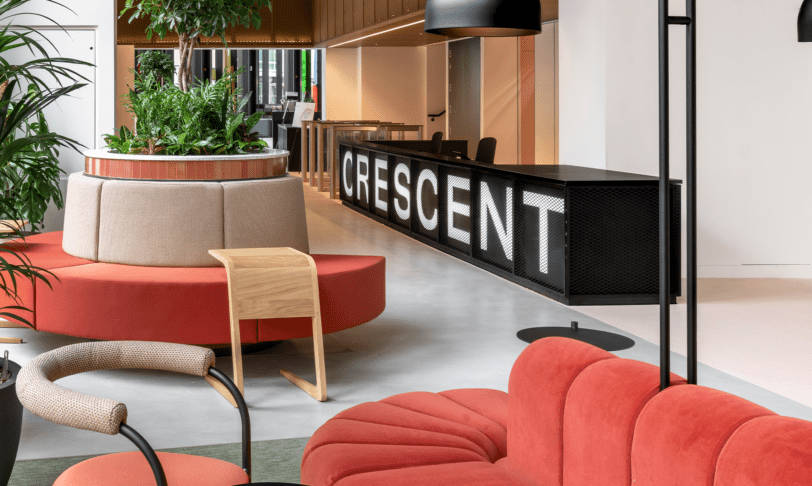
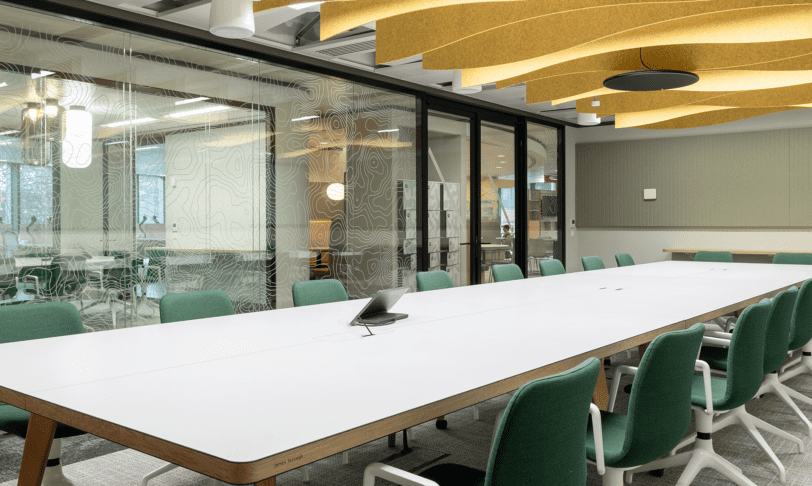
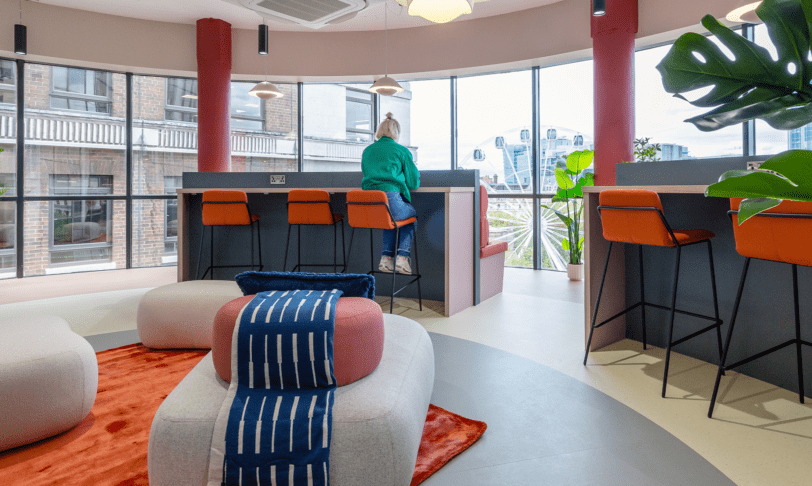
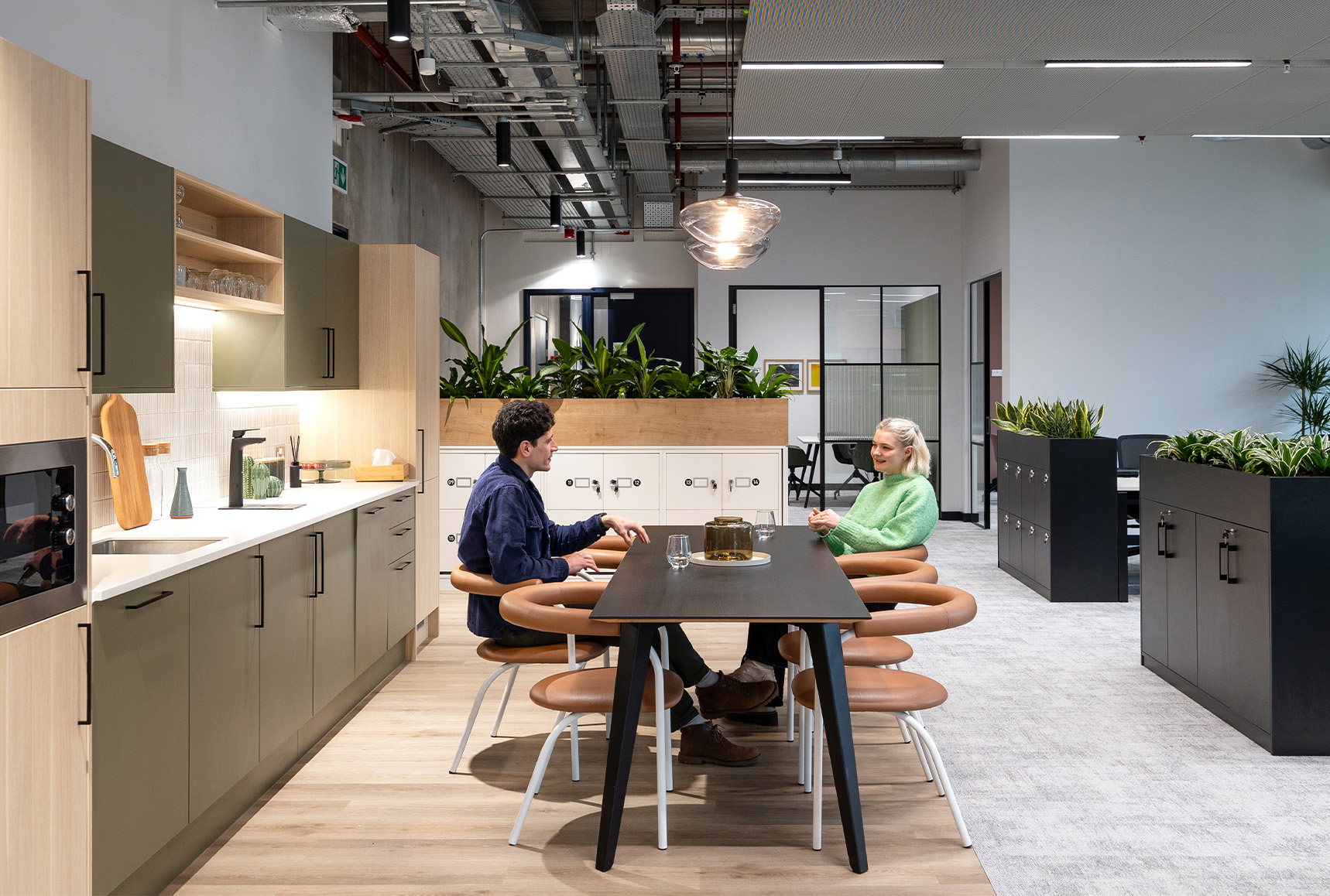
]Tenant-ready spaces (with furniture, AV, connectivity and amenities already built in) dramatically cut decision time. Instead of imagining what could be, tenants can see, feel, and sign for a complete experience.
JLL data shows that experiential, move-in-ready spaces achieve 10–20% higher rents than traditional CAT A baselines. Prime examples in London and Manchester show that the flight to quality is as much about experience as it is about location or ESG metrics. Well-designed space reduces downtime and elevates revenue from day one.
2. More loyal tenants
Modern tenants know that workspace quality is a visible signal to their own employees and clients. Offices with smart layouts, rich amenities and social spaces foster culture, collaboration, and employee retention, which makes them harder for tenants to walk away from at lease renewal time. The right design keeps tenants happy, engaged – and staying longer.
A well-designed office is a long-term loyalty program, built in bricks and mortar.
3. Increased flexibility, lower lifecycle
Flexibility is a design strategy. Spaces that can easily toggle between focused work, collaboration, and social interaction mean tenants can evolve inside the building, rather than moving out as their needs change. Pre-designed flexibility (modular desking, tech-enabled meeting rooms, wellness zones) lowers the cost and disruption of future refurbishments, increasing the lifetime value of every fit-out cycle.
Designing in flexibility today saves six-figure reinvestments tomorrow.
4. Future-proofed asset values
Design is now a financial instrument. Assets with turnkey layouts, futureproof infrastructure, and experiential fit-outs stay liquid even as the market hardens. Institutional buyers and REITs increasingly target buildings that don’t go beyond compliance to perform, flex and attract tenants without the need for immediate capex.
In a world where stranded assets are already piling up, the liquidity premium for plug-and-play, brand-ready space will only rise. A well-designed asset doesn’t just cashflow better – it exits cleaner and faster.
Productise the outcome, not just the process
In a market where decision cycles are short and tenant expectations are sky-high, landlords don’t need another fit-out contractor: they need a product that delivers certainty, speed, and premium appeal from day one.
That’s why we built Primed: our landlord service that delivers ready-to-go, revenue-ready workspaces that turn capex into cashflow faster.
- Certifications matter. Tenants are actively seeking office spaces with BREEAM, LEED, NABERS and WELL ratings, which signal a building’s environmental and human-centric performance.
- Energy efficiency is non-negotiable. With energy costs rising and Scope 3 emissions under scrutiny, tenants want to occupy buildings that reduce their operational carbon footprint.
- Smart building technology is increasingly valued, offering real-time data on energy use, occupancy, and indoor air quality, all crucial for ESG reporting.
- Employee well-being remains central. Tenants want flexible and healthy spaces that support productivity, retention, and a strong workplace culture – key priorities in the era of hybrid work.
As companies compete for talent, office space has become a strategic tool. High-performing workplaces are now central to organisational success, not just operational logistics.
The benefits of net-zero office spaces
For landlords and investors, net-zero offices offer a powerful combination of carbon reduction, along with financial, strategic, and environmental benefits.
- Long-term ROI: Sustainable offices benefit from reduced operational costs over time. Research shows that LEED-certified green buildings report nearly 20% lower maintenance costs than typical commercial buildings. Additionally, green buildings often consume less water and energy due to more efficient systems, lowering long-term expenses.
- Future-proofing: As regulations tighten, assets that fail to meet net-zero standards risk becoming stranded. In contrast, sustainable buildings are more likely to retain value and appeal over the long term.
- Premium returns: Sustainable assets command higher rental yields. Various studies show that certified green buildings achieve notable financial benefits. For example, LaSalle Investment Management reports that green-certified properties can attract sale prices up to 25% higher than non-certified buildings.
- Access to green finance: Net-zero assets unlock access to sustainability-linked loans, tax incentives and green bonds, reducing capital costs and appealing to ESG-aligned investors.
In essence, eco-friendly office buildings benefit both the planet and business performance.
Key strategies for commercial property owners
Building a truly net-zero office requires more than a few rooftop solar panels. It demands a holistic, forward-thinking approach from concept to completion.
Here’s how commercial landlords can turn vision into value:
- Smart energy systems: Deploy intelligent energy management to monitor and reduce consumption in real time. This includes HVAC optimisation, smart lighting and predictive analytics.
- Onsite renewable energy: Solar PV systems, heat pumps, and even wind turbines can drastically cut reliance on grid energy, especially when paired with energy storage.
- Circular design principles: Use low-carbon materials, prioritise reuse and recyclability, and design for disassembly to support a circular economy.
- Biophilic design & wellness: Integrate natural materials, living walls, and daylight to promote wellbeing and enhance indoor environmental quality.
- Flexibility & future-proofing: Incorporate modular layouts, demountable partitions and adaptable infrastructure to meet changing tenant needs.
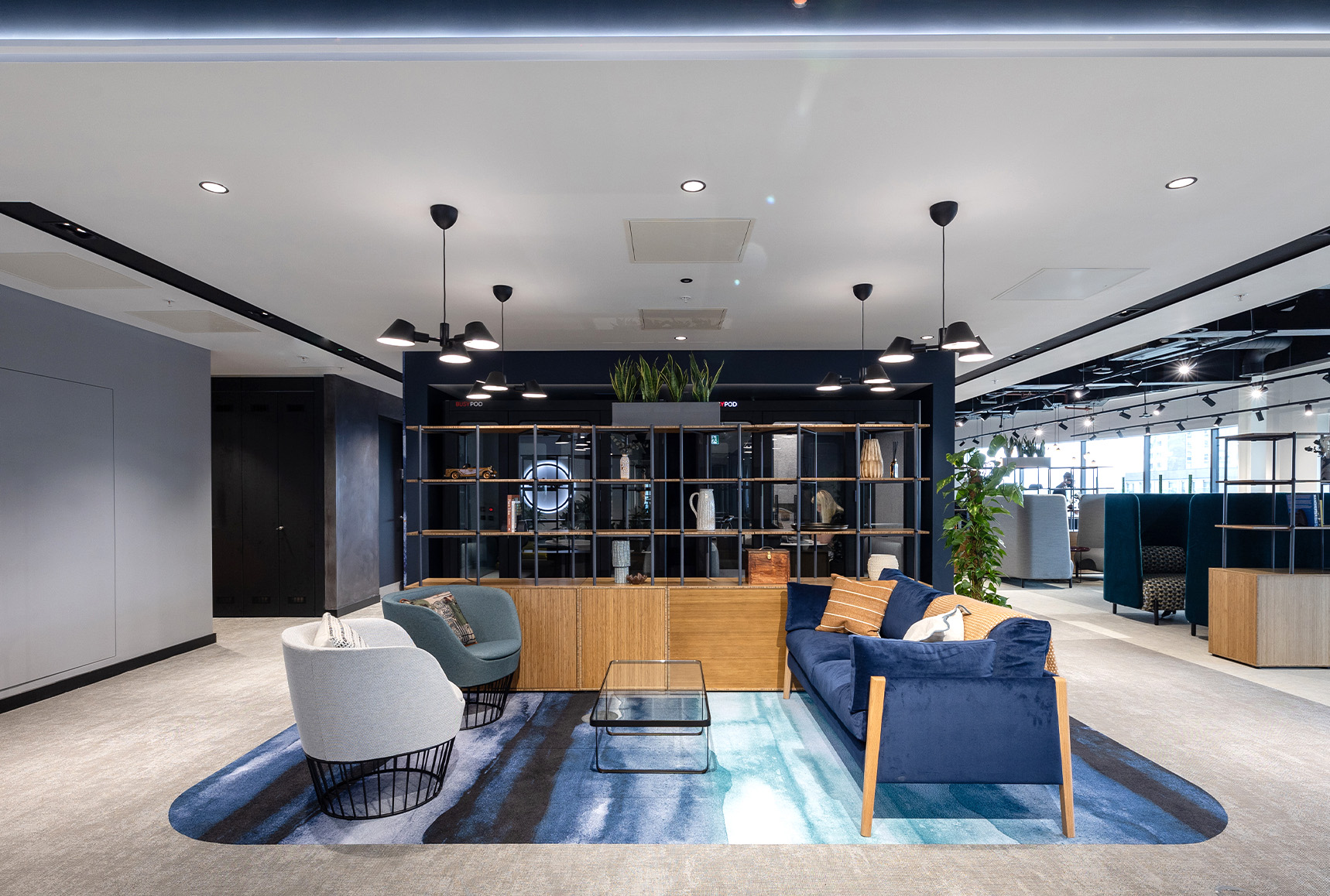
At Interaction, we create CAT A+ spaces designed for today’s needs, with the adaptability to meet tomorrow’s demands.
Leading sustainable office developments
There are already stellar examples in the UK of net-zero offices leading the way in both design and performance.
The Forge, Southwark, London
Located in London’s Bankside, The Forge is celebrated as the UK’s first net-zero carbon commercial building. Developed by Landsec, this project comprises two office buildings, Bronze and Phosphor, surrounding a public courtyard. The development showcases innovative construction techniques, including a platform approach to design for manufacture and assembly (P-DfMA), which significantly reduces embodied carbon. The Forge operates entirely on electricity, sourced from 100% renewable energy, and features 298m² of green roofing to enhance biodiversity.
Key features:
- All-electric energy systems powered by renewable electricity
- Green roofing to promote biodiversity
- P-DfMA construction method reducing embodied carbon
100 Liverpool Street, London
British Land’s redevelopment of 100 Liverpool Street stands as a testament to sustainable design in urban settings. This project transformed an existing 1980s structure into a modern, ultra-low carbon office space. By retaining significant portions of the original building’s steel frame and concrete foundations, the development achieved substantial embodied carbon savings. The building has earned a BREEAM ‘Outstanding’ rating and is British Land’s first net-zero carbon building.
Key features:
- Retention and reuse of 32% of the existing steel frame and 49% of concrete foundations
- Use of lower carbon materials, including 51% secondary aggregates and 44% cement replacement
- Implementation of smart building technologies and WELL Gold certification
Marketing net-zero offices to high-value tenants
Strategic marketing is key to showcasing a net-zero building’s value and attracting high-calibre tenants.
- Data transparency: Use digital tools and certifications to clearly demonstrate net-zero outcomes. Transparency is a key decision driver for tenants and investors.
- Tech-enabled management: Smart property systems enable proactive maintenance, predictive analytics, and seamless tenant engagement, key selling points in a tech-driven market.
- Leasing strategies: Promote sustainability credentials in commercial listings and tailor messaging to tenant ESG goals. Offering tenant fit-out guidance aligned with sustainability standards can further differentiate your proposition.
Demonstrating how a space aligns with tenant priorities can turn initial interest into long-term commitment.
Net-zero design offers fund managers and landlords a strategic path to future-proof portfolios, attract ESG-driven tenants, and maintain regulatory alignment. At Interaction, we’re committed to designing and delivering eco-friendly office buildings that go beyond compliance. Our strategic, people-first approach ensures every workspace is functional, inspiring, and built for a net-zero future.
Now is the time to align portfolios with the future of work – because uninspired offices have no place in a net-zero world. Contact us today.